
- Study Guide: AWS Certified Generative AI Developer – Professional
- Tough but Fair: My Take on Passing the AWS Certified Generative AI Developer – Professional Exam
- How I Passed the Claude Certified Architect – Foundations Exam as a “Data Guy”
- Microsoft Fabric IQ: The Foundation Data Architects Need to Know
- The Data-AI Stratification Model: Why Your AI Initiatives Keep Failing
- Building AI Systems with Databricks Multi-Agent Supervisor
- Snowflake Cortex Agents: Structured and Unstructured Data
- Fabric Data Agent: Structured and Unstructured Data
- Maximizing Power BI Copilot: A Data Analyst Guide to AI-Ready Semantic Models
- MCP: Meeting Business Users Where They Are
- AI-Powered Data Engineering with Model Context Protocol
- How Model Context Protocol Transforms Database Access for Everyone: Microsoft Perspective
- Scoping Data and AI Projects
- Setting Your Data and AI Projects Up for Success: A Strategic Guide to Timelines and Metrics
- The Hidden Key to Data and AI Project Success: Aligning Teams and Stakeholders
- Defining Data and AI Capabilities and Technology Requirements: Building a Foundation for Project Success
- The Foundation of Data and AI Project Success: Understanding Project Objectives and Business Goals
- From Vision to Reality: Why Effective Scoping is the Make-or-Break Factor for Data and AI Projects
- Data Quality Metrics Schema
- AI Quality Metrics Schema
- The Foundation of AI Success Part III: Why AI Quality Metrics Are Critical for AI Solutions
- The Foundations of AI Success Part II: Why Document and Content Management are Critical for AI Solutions
- The Foundations of AI Success Part I: Why Data Quality Metrics Are Critical for AI Solutions
- Effective Team Structures for LLM Application Success
- Deployment Strategies: Optimizing Microsoft Foundry Models for Cost, Performance, and Scale
- New AI Instruction Strategy in Microsoft Fabric: A Technical Overview
- Data Modeling for AI Agents: A Practical Guide
- Agent Bricks: Advancing Task-Specific Agent Development
- Strategy to Strengthen Copilot Studio Topics
- AI and SQL from “Ground to Cloud”
- Tracking AI Usage in Healthcare UPDATE
- Databricks Mosaic AI Framework
- Microsoft Fabric AI Functions
- Copilot Studio
- Choose Models from Azure AI Foundry: A Component Guide
- Microsoft Foundry Toolkit for VS Code: What Changed and Why It Matters
- Foundry Resources and Projects in Microsoft Foundry
- Using the Microsoft Foundry Tools
- Aggregating Data Context to the Right
- Shifting Data Capabilities to the Left
- Microsoft Fabric Data Agents and Azure AI Foundry Agents
- Tracking AI Usage in Healthcare (part 3 of 3)
- Tracking AI Usage in Healthcare (part 2 of 3)
- Tracking AI Usage in Healthcare (part 1 of 3)
- Microsoft Fabric Data Agent Concept
Study Guide: AWS Certified Generative AI Developer – Professional
Here’s the study plan I used to prepare for the AWS Certified Generative AI Developer – Professional exam, laid out as a printable checklist. It covers three phases (a 15-day Udemy course schedule, the AWS Skill Builder review for all five exam domains, and the official practice exam cycle until you consistently hit 85%), plus…


Tough but Fair: My Take on Passing the AWS Certified Generative AI Developer – Professional Exam
Generative AI on AWS isn’t one skill: it’s foundation models, retrieval systems, agentic orchestration, safety and governance, and cost optimization all at once, and this exam tests all of it. Here’s an honest walkthrough of the five domains, why the exam earned its “tough but fair” reputation, and what it actually takes to pass if…
How I Passed the Claude Certified Architect – Foundations Exam as a “Data Guy”
In April 2026 I passed the Anthropic Claude Certified Architect – Foundations exam, and my 20 years in enterprise data management were the reason. Here’s how I prepared, how each exam domain maps to data architecture concepts, and what I’d tell the next data professional taking it.
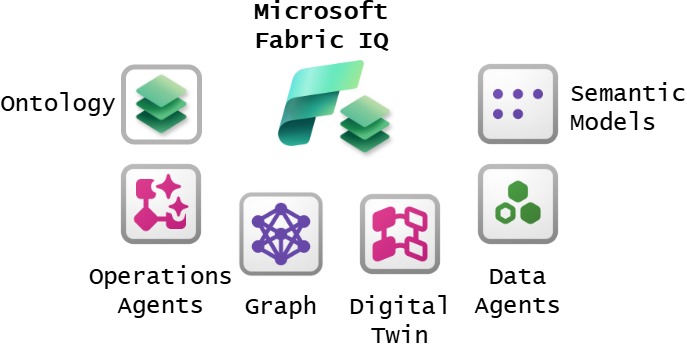
Microsoft Fabric IQ: The Foundation Data Architects Need to Know
Microsoft Fabric IQ reached general availability at Build 2026, turning what was a preview into a platform architects now need to design around. This breakdown covers Fabric IQ’s five components: Ontology, Graph, Data Agent, Operations Agent, and Semantic Model. How they reinforce one another, and the governance decisions data architects need to make now that…
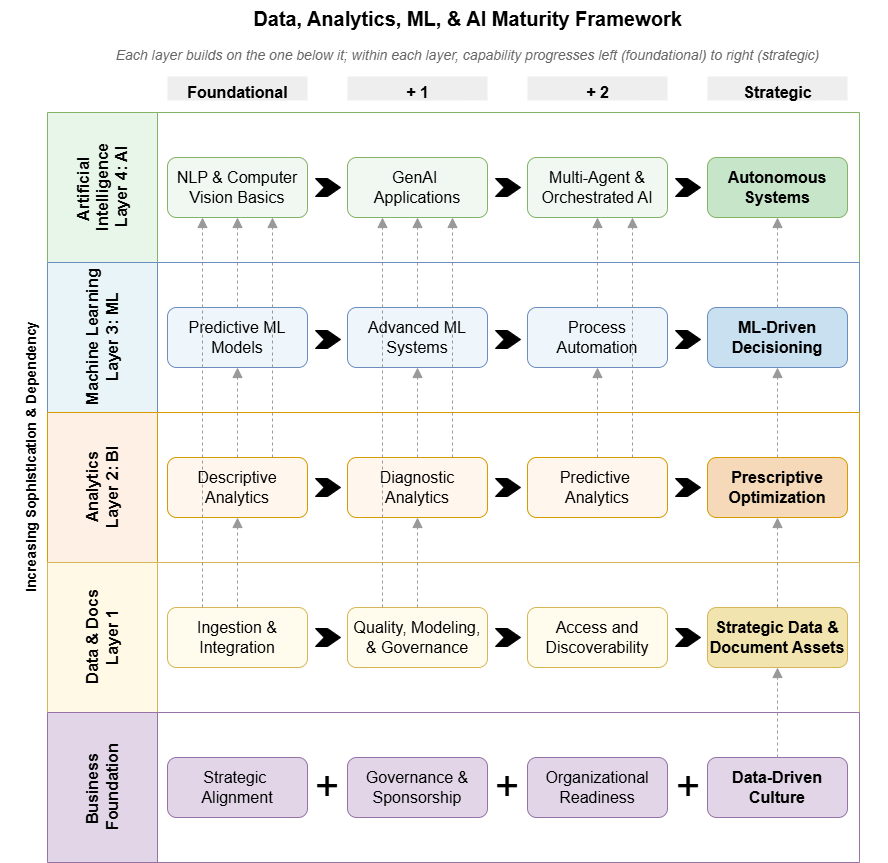
The Data-AI Stratification Model: Why Your AI Initiatives Keep Failing
A 4-layer framework for sequencing Data, BI, ML, and AI investment. Yhy skipping layers is the top reason AI initiatives fail to deliver value.
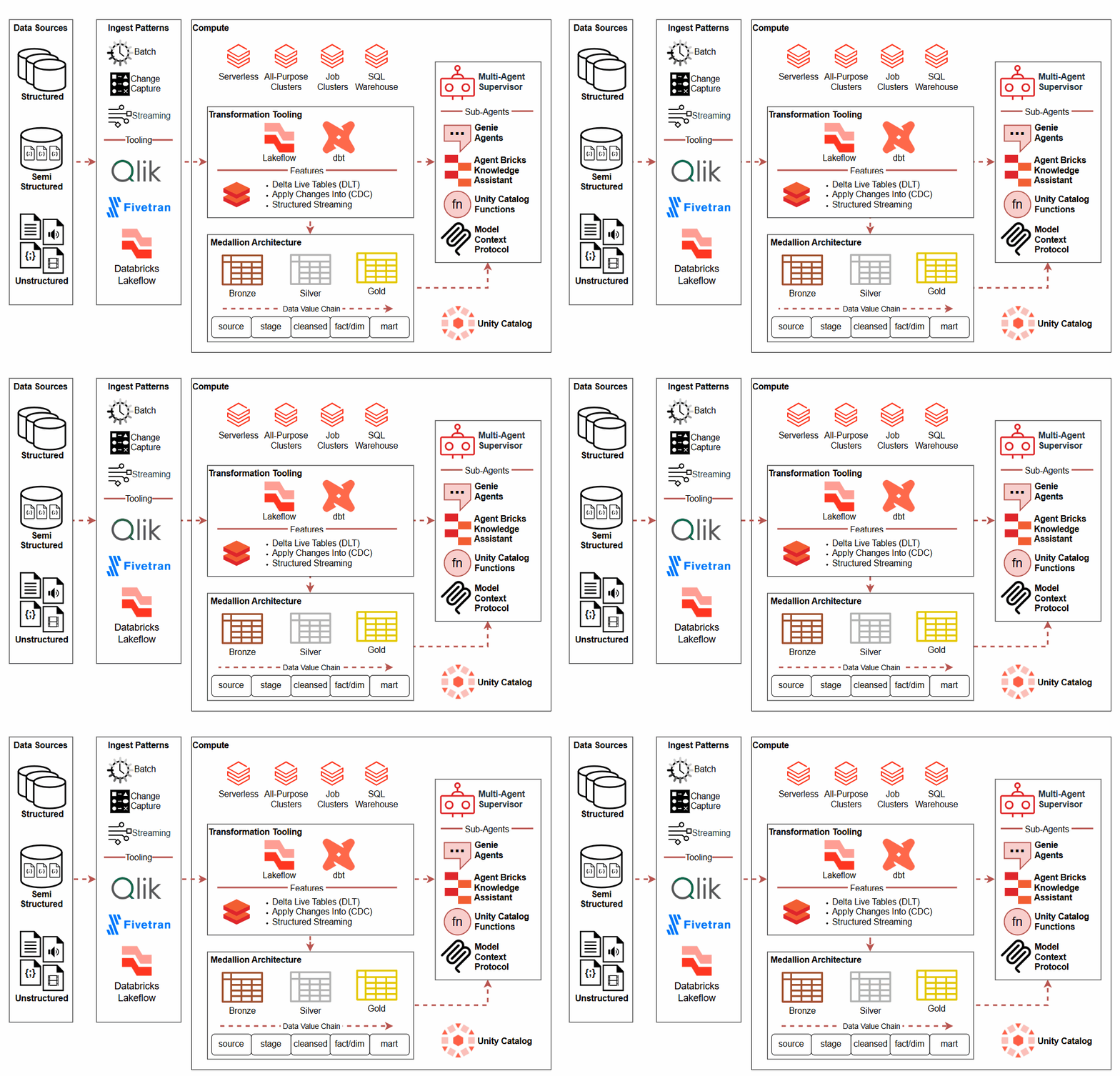
Building AI Systems with Databricks Multi-Agent Supervisor
Updated Date: Enterprise AI has evolved beyond simple chatbots answering single questions. Modern organizations need AI systems that can handle complex queries spanning multiple data sources, domains, and knowledge types. The Supervisor Agent (Databricks’ orchestration layer for coordinating specialized AI agents, now generally available) addresses this challenge by orchestrating specialized AI agents into a coordinated…
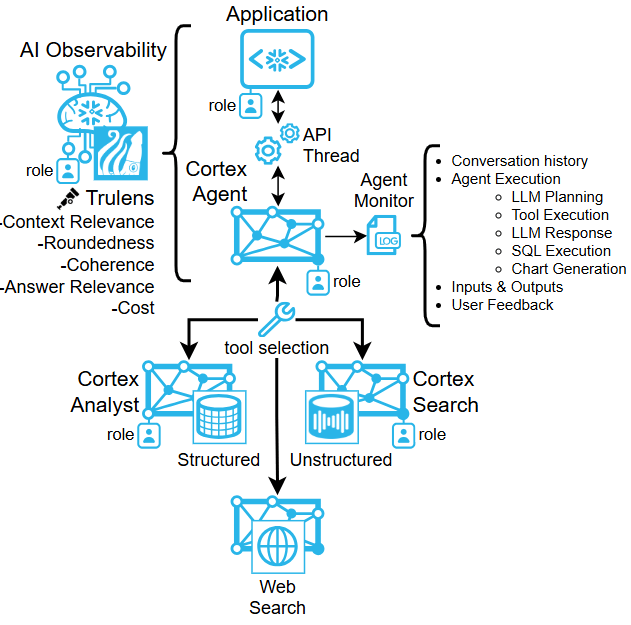
Snowflake Cortex Agents: Structured and Unstructured Data
Updated Date: Enterprise AI faces a fundamental trust problem. While language models generate fluent responses, users increasingly question whether those answers are actually true. The solution is not more sophisticated text generation. Instead, the answer is intelligent orchestration of verified data sources with quality measurement. Snowflake Cortex Agents solve this through a three-tier architecture that…
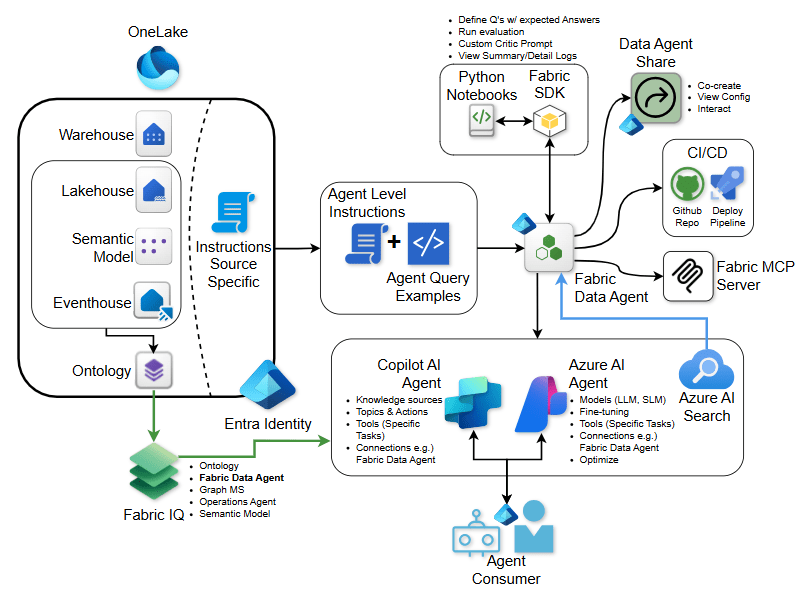
Fabric Data Agent: Structured and Unstructured Data
Explore Microsoft Fabric Data Agent’s AI-powered natural language queries across lakehouses, warehouses, semantic models, and Azure AI Search indexes.

Maximizing Power BI Copilot: A Data Analyst Guide to AI-Ready Semantic Models
Overview of Copilot in Power BI Imagine asking your data a question in plain English and getting an instant, accurate answer. That’s the promise of Power BI Copilot as a generative AI assistant that can transform how users interact with business intelligence. Rather than clicking through menus or building complex queries, users can simply type…
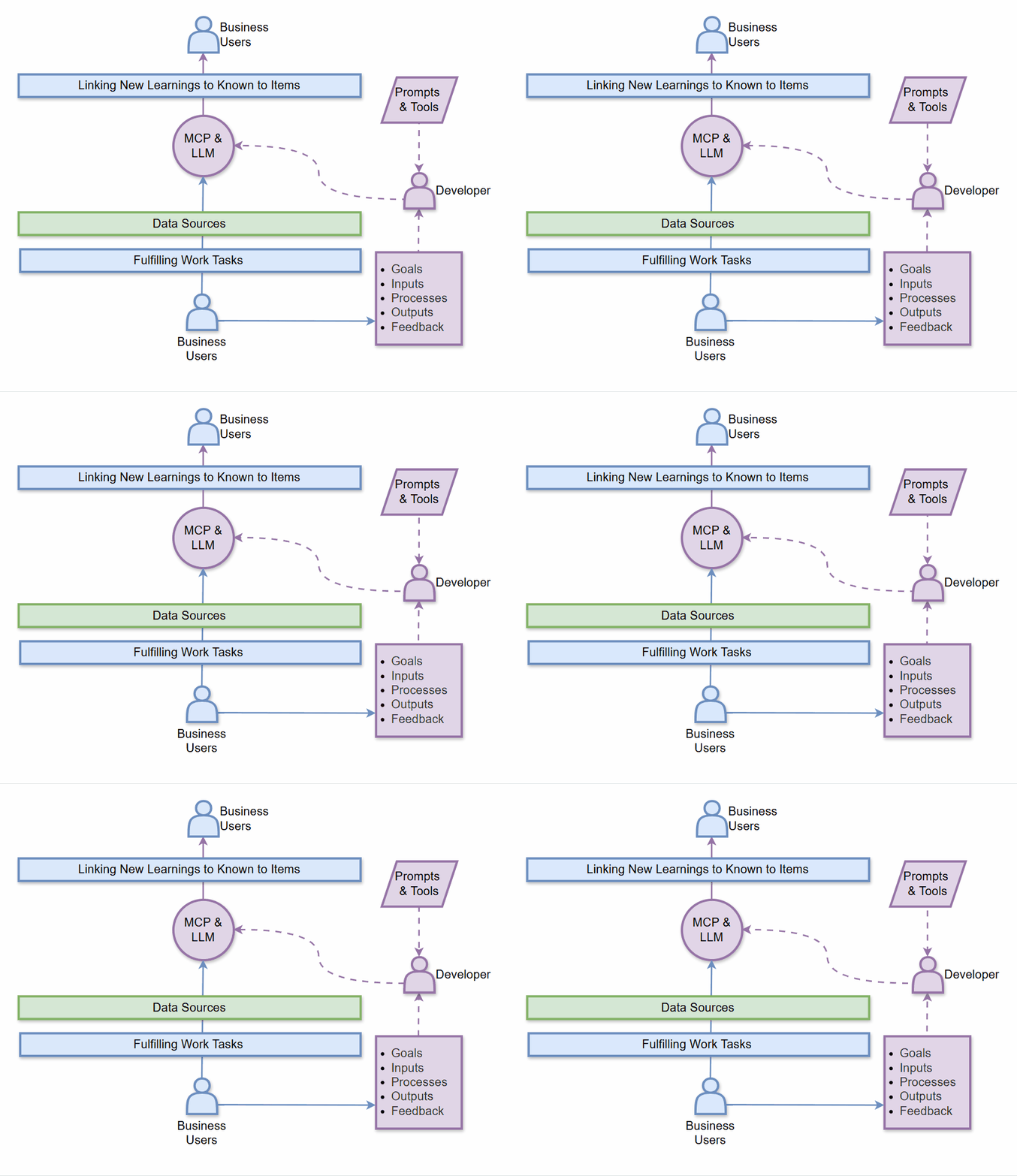
MCP: Meeting Business Users Where They Are
MCP with Query Capabilities Model Context Protocol (MCP) represents a paradigm shift in how data professionals deliver analytics to business users. At its core, MCP transforms the traditional analytics workflow by enabling Data Engineers and Data Analysts to encode their domain observations into structured prompts, resources, and tools that power intuitive, conversational interactions. The Observation-to-Context…