- Microsoft Fabric IQ: The Foundation Data Architects Need to Know
- Fabric Data Agent: Structured and Unstructured Data
- Maximizing Power BI Copilot: A Data Analyst Guide to AI-Ready Semantic Models
- AI-Powered Data Engineering with Model Context Protocol
- How Model Context Protocol Transforms Database Access for Everyone: Microsoft Perspective
- New AI Instruction Strategy in Microsoft Fabric: A Technical Overview
- Faster, Cheaper Spark in Fabric: An Updated Look at the Native Execution Engine
- Microsoft Fabric AI Functions
- Microsoft Fabric Data Agents and Azure AI Foundry Agents
- Microsoft Fabric Data Agent Concept
- MS Fabric with Snowflake to PowerBI
- Microsoft Fabric: Lakehouse Foundational Capabilities
- Business Analysis Future State Measurables with Microsoft Fabric
- Microsoft Fabric Capability Analysis Example
- Deeper Dive into Microsoft Fabric and Business Needs
- Microsoft Fabric Scoping Overview
- Microsoft Fabric Team Structure
- Business Need and Microsoft Fabric Capabilities
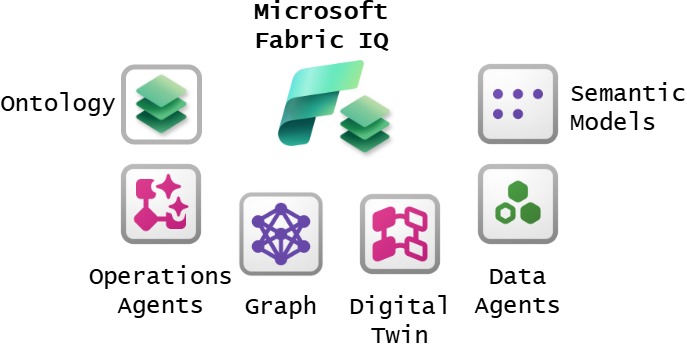
Microsoft Fabric IQ: The Foundation Data Architects Need to Know
Microsoft Fabric IQ reached general availability at Build 2026, turning what was a preview into a platform architects now need to design around. This breakdown covers Fabric IQ’s five components: Ontology, Graph, Data Agent, Operations Agent, and Semantic Model. How they reinforce one another, and the governance decisions data architects need to make now that…

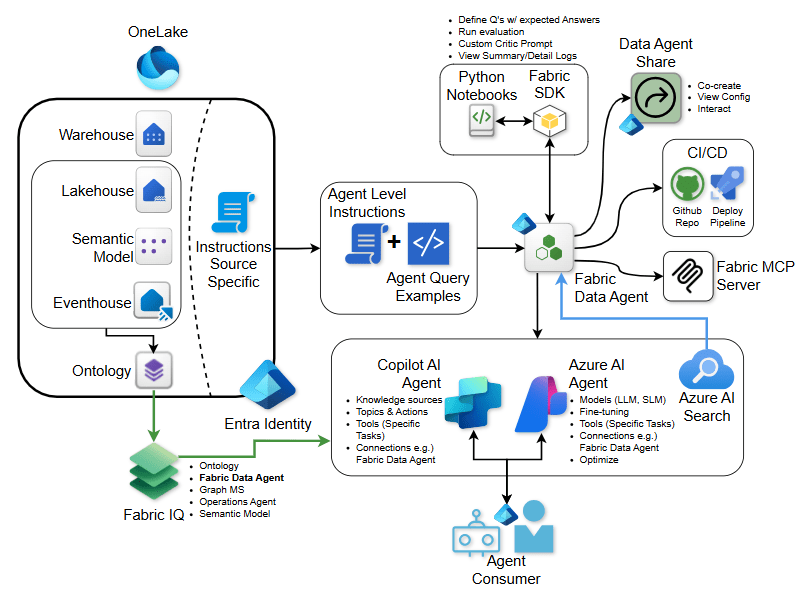
Fabric Data Agent: Structured and Unstructured Data
Explore Microsoft Fabric Data Agent’s AI-powered natural language queries across lakehouses, warehouses, semantic models, and Azure AI Search indexes.

Maximizing Power BI Copilot: A Data Analyst Guide to AI-Ready Semantic Models
Overview of Copilot in Power BI Imagine asking your data a question in plain English and getting an instant, accurate answer. That’s the promise of Power BI Copilot as a generative AI assistant that can transform how users interact with business intelligence. Rather than clicking through menus or building complex queries, users can simply type…

AI-Powered Data Engineering with Model Context Protocol
The same protocol that connects AI agents to your data can also speed up the people who build it. This post compares how Microsoft Fabric, Databricks, and Snowflake each approach Model Context Protocol, from Fabric’s local, developer-controlled context layer to Databricks’ managed, external, and custom server options and Snowflake’s fully managed server with built-in governance.…

How Model Context Protocol Transforms Database Access for Everyone: Microsoft Perspective
Business users speak strategy; databases speak SQL. The Model Context Protocol (MCP) closes that gap by letting AI agents turn plain-English questions into secure database queries. This post covers Microsoft’s three MCP servers (MSSQL, Fabric, and Fabric Real-Time Intelligence), how the architecture works, real-world use cases, and what to consider before rolling MCP out across…
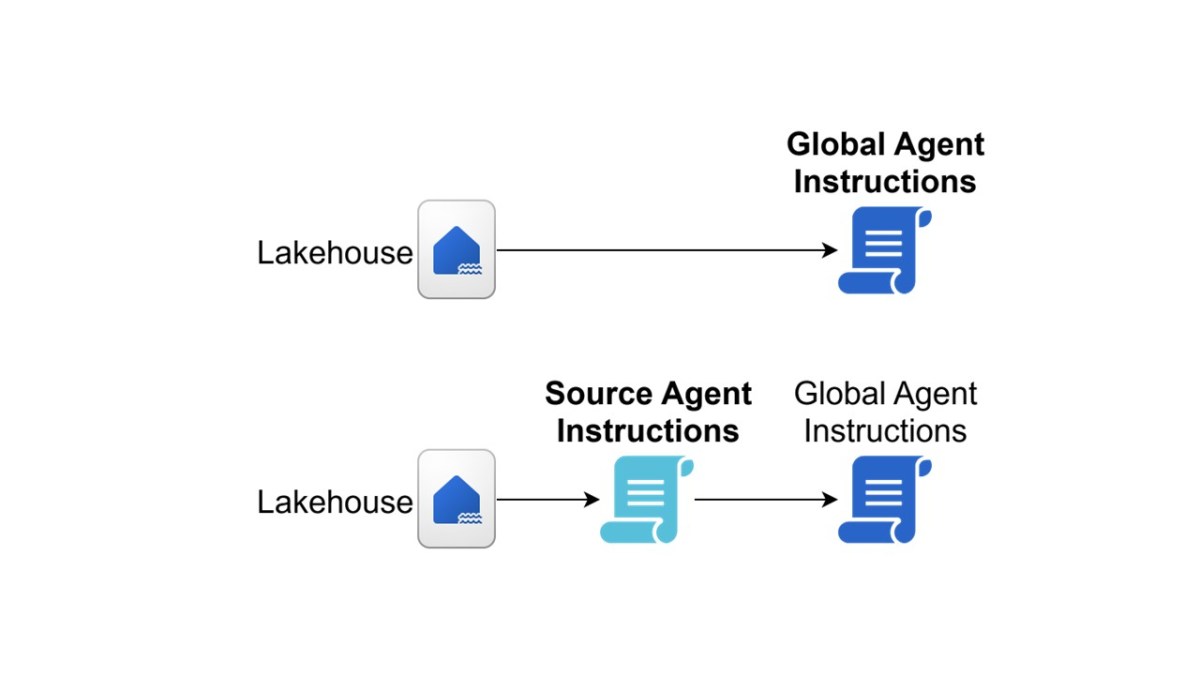
New AI Instruction Strategy in Microsoft Fabric: A Technical Overview
As data environments grow more diverse, one set of global rules can’t guide an AI agent across every source. This technical overview explains how Microsoft Fabric’s Data Source Agent Instructions add source-specific guidance on top of Global Agent Instructions, creating a layered system that improves table selection, schema navigation, terminology consistency, and query accuracy. It…

Faster, Cheaper Spark in Fabric: An Updated Look at the Native Execution Engine
Fabric’s Native Execution Engine runs Spark on a columnar, vectorized C++ engine with no code changes. This updated guide covers support for Runtime 1.3 and 2.0, how to turn the engine on, how to confirm it’s actually being used, and the limitations to check before you rely on it.

Microsoft Fabric AI Functions
When I first covered Microsoft Fabric AI Functions in 2025, the pitch was generative AI in one line of code. Since then, the feature has grown up. There are now nine functions, and they run in T-SQL and Dataflow Gen2 as well as notebooks. They also handle PDFs and images, work with your choice of…

Microsoft Fabric Data Agents and Azure AI Foundry Agents
Greater than their parts… It may seem like a baby step, but integrating Microsoft Fabric Data Agents with Azure AI Foundry Agents offers a seamless and efficient pathway for managing and analyzing vast amounts of data. This enhances data accessibility and insights, enabling organizations to make informed decisions faster. Moreover, leveraging the advanced capabilities of…

Microsoft Fabric Data Agent Concept
Fabric Data Agents allow you to build conversational Q&A systems using generative AI allowing you to convert natural language into data queries and returning the answers back in natural language. Benefit of Agents in Fabric… Microsoft Fabric OneLake offers significant advantages for data management by enabling the construction of Fabric Data Agents, leveraging a diverse…