
- Microsoft Fabric IQ: The Foundation Data Architects Need to Know
- Data, BI, ML, AI is Connected: The Critical Framework You Are Missing
- Building AI Systems with Databricks Multi-Agent Supervisor
- Snowflake Cortex Agents: Structured and Unstructured Data
- Fabric Data Agent: Structured and Unstructured Data
- Maximizing Power BI Copilot: A Data Analyst Guide to AI-Ready Semantic Models
- MCP: Meeting Business Users Where They Are
- MinIO AIStor: Key Takeaways from Their Conference Booth 2025
- Grafana Observability Stack Overview
- Grafana Mimir: A Technical Architecture Overview
- A Grafana Loki Overview
- Qlik 2025 Review
- AI-Powered Data Engineering with Model Context Protocol
- How Model Context Protocol Transforms Database Access for Everyone: Microsoft Perspective
- Scoping Data and AI Projects
- Setting Your Data and AI Projects Up for Success: A Strategic Guide to Timelines and Metrics
- The Hidden Key to Data and AI Project Success: Aligning Teams and Stakeholders
- Defining Data and AI Capabilities and Technology Requirements: Building a Foundation for Project Success
- The Data Detective: How Quality Assessment Shapes Successful Data and AI Project Scoping
- The Foundation of Data and AI Project Success: Understanding Project Objectives and Business Goals
- From Vision to Reality: Why Effective Scoping is the Make-or-Break Factor for Data and AI Projects
- Data Quality Metrics Schema
- AI Quality Metrics Schema
- The Foundation of AI Success Part III: Why AI Quality Metrics Are Critical for AI Solutions
- The Foundations of AI Success Part II: Why Document and Content Management are Critical for AI Solutions
- The Foundations of AI Success Part I: Why Data Quality Metrics Are Critical for AI Solutions
- Patients and Addresses (Introduction)
- Effective Team Structures for LLM Application Success
- Deployment Strategies: Optimizing Azure AI Foundry Models for Cost, Performance, and Scale
- New AI Instruction Strategy in Microsoft Fabric: A Technical Overview
- Data Modeling Guide for AI
- T-SQL Workload Strategy
- Agent Bricks: Advancing Task-Specific Agent Development
- Strategy to Strengthen Copilot Studio Topics
- 4x Fabric Efficiency with the new Native Execution Engine
- AI and SQL from “Ground to Cloud”
- Tracking AI Usage in Healthcare UPDATE
- Databricks Mosaic AI Framework
- Snowflake Openflow Overview
- Microsoft Fabric AI Functions
- Copilot Studio
- ORM – Financial Services: Insurer, Claim, Policy Holder, Contract, Contract Claim
- Choose Models from Azure AI Foundry: A Component Guide
- Azure AI Foundry and VS Code Integration Overview
- Leveraging Hubs and Projects in Azure AI Foundry
- Azure AI Foundry
- ORM – Financial Insurance: Insurer, Underwriting, Policy, Contract, Agent
- Aggregating Data Context to the Right
- Shifting Data Capabilities to the Left
- Microsoft Fabric Data Agents and Azure AI Foundry Agents
- Major Data Domains in Manufacturing
- Tracking AI Usage in Healthcare (part 3 of 3)
- Tracking AI Usage in Healthcare (part 2 of 3)
- Tracking AI Usage in Healthcare (part 1 of 3)
- Microsoft Fabric Data Agent Concept
- MS Fabric with Snowflake to PowerBI
- Microsoft Fabric: Lakehouse Foundational Capabilities
- Business Analysis Future State Measurables with Microsoft Fabric
- Microsoft Fabric Capability Analysis Example
- Deeper Dive into Microsoft Fabric and Business Needs
- Microsoft Fabric Scoping Overview
- Microsoft Fabric Team Structure
- Business Need and Microsoft Fabric Capabilities
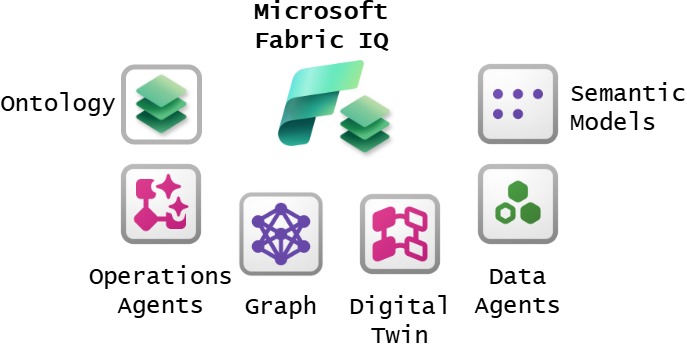
Microsoft Fabric IQ: The Foundation Data Architects Need to Know
Building Enterprise AI on a Foundation of Shared Business Meaning For Data Architects, the pressure has never been greater. Business stakeholders want conversational AI that understands their domain. Compliance teams need governed, auditable data access. Engineers need semantic consistency across lakehouses, warehouses, and real-time streams. Microsoft Fabric IQ is Microsoft’s platform to support those capabilities,…

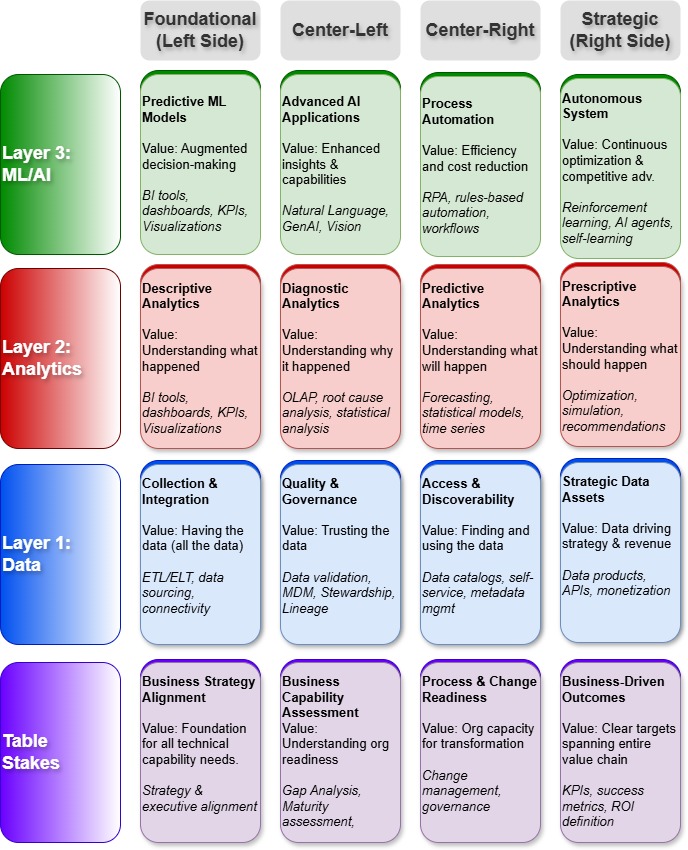
Data, BI, ML, AI is Connected: The Critical Framework You Are Missing
Understanding the Vertical and Horizontal Modeling of Data, Analytics, and AI Success Every week, another organization announces a major AI initiative. Billions are being invested in artificial intelligence, machine learning, and generative AI. Yet studies show the rate these initiatives fail to deliver meaningful business value. The culprit is not technology, but instead it is…
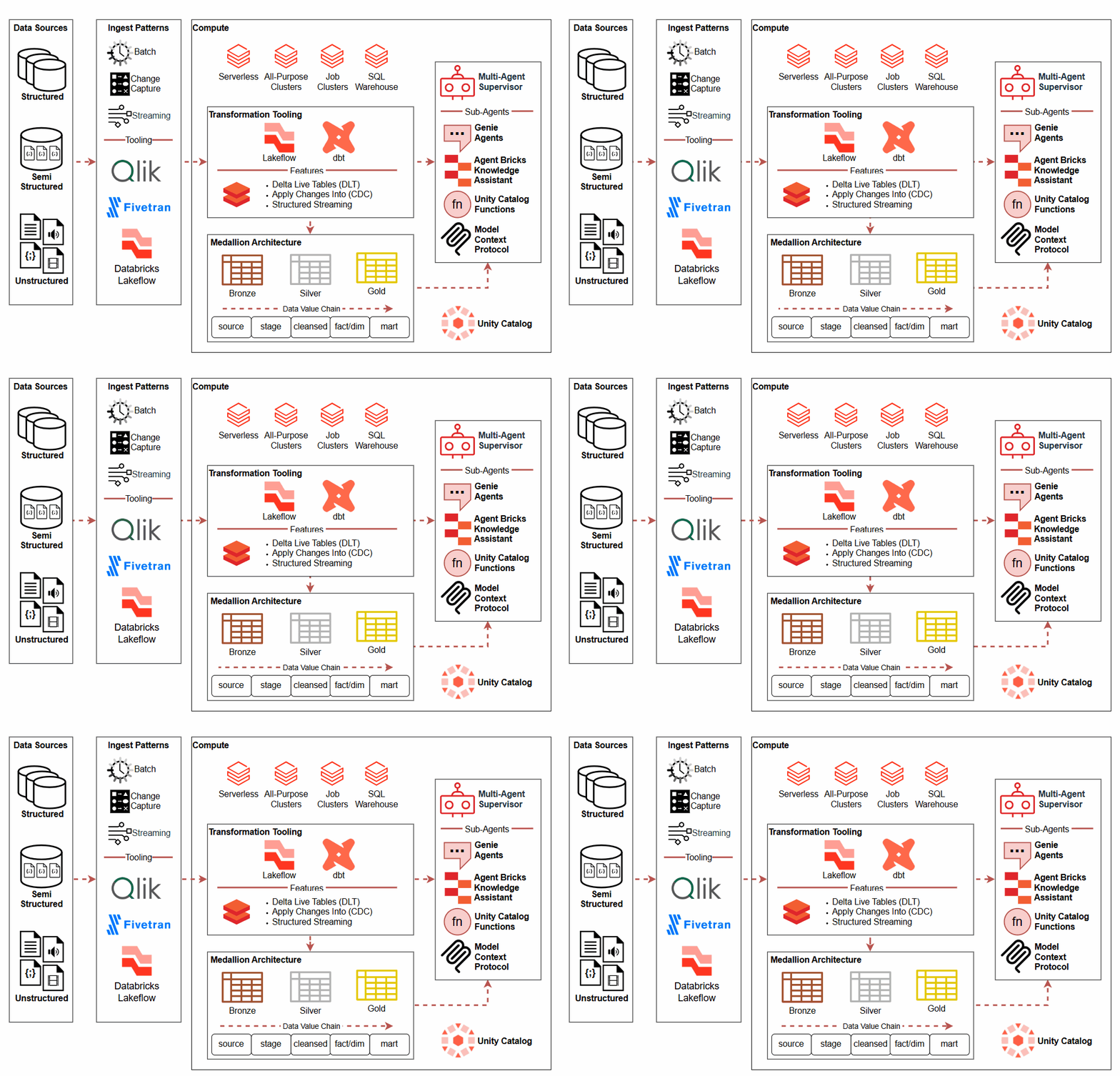
Building AI Systems with Databricks Multi-Agent Supervisor
Enterprise AI has evolved beyond simple chatbots answering single questions. Modern organizations need AI systems that can handle complex queries spanning multiple data sources, domains, and knowledge types. The Databricks Multi-Agent Supervisor addresses this challenge by orchestrating specialized AI agents into a coordinated system that delivers comprehensive, accurate responses while maintaining enterprise grade governance. Coordinated…
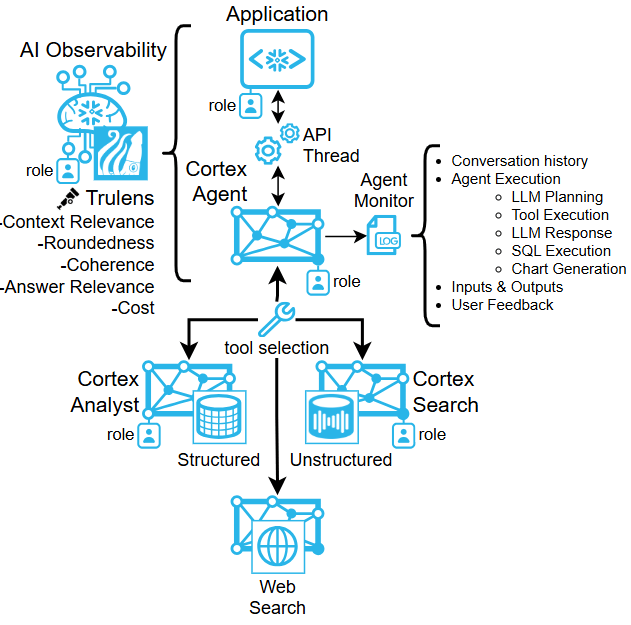
Snowflake Cortex Agents: Structured and Unstructured Data
Enterprise AI faces a fundamental trust problem. While language models generate fluent responses, users increasingly question whether those answers are actually true. The solution is not more sophisticated text generation. Instead, the answer is intelligent orchestration of verified data sources with quality measurement. Snowflake Cortex Agents solve this through a three-tier architecture that automatically routes…
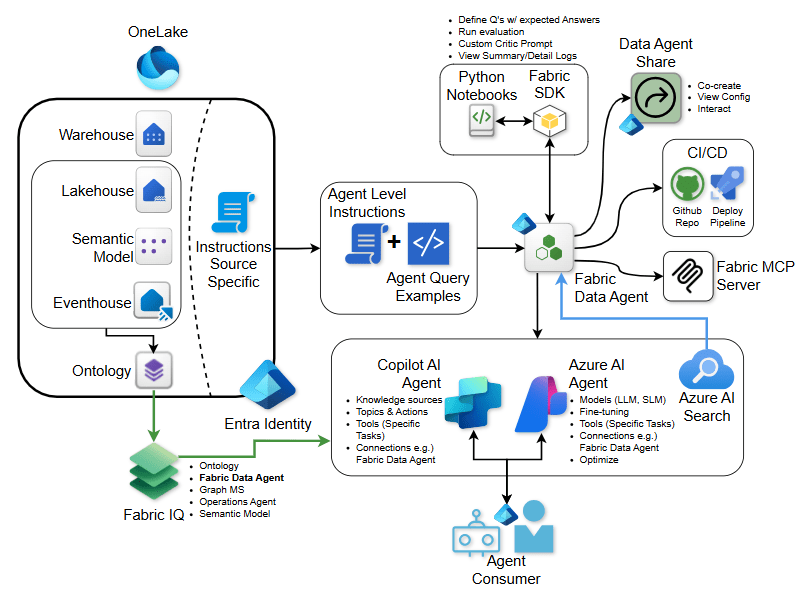
Fabric Data Agent: Structured and Unstructured Data
What is Microsoft Fabric Data Agent? Microsoft Fabric Data Agent is an AI-powered conversational system that enables users to interact with enterprise data using natural language queries, eliminating the need for complex SQL, DAX, or KQL expertise Microsoft Learn. The system uses Azure OpenAI Assistant APIs to process questions, identify relevant data sources, and generate…

Maximizing Power BI Copilot: A Data Analyst Guide to AI-Ready Semantic Models
Overview of Copilot in Power BI Imagine asking your data a question in plain English and getting an instant, accurate answer. That’s the promise of Power BI Copilot as a generative AI assistant that can transform how users interact with business intelligence. Rather than clicking through menus or building complex queries, users can simply type…
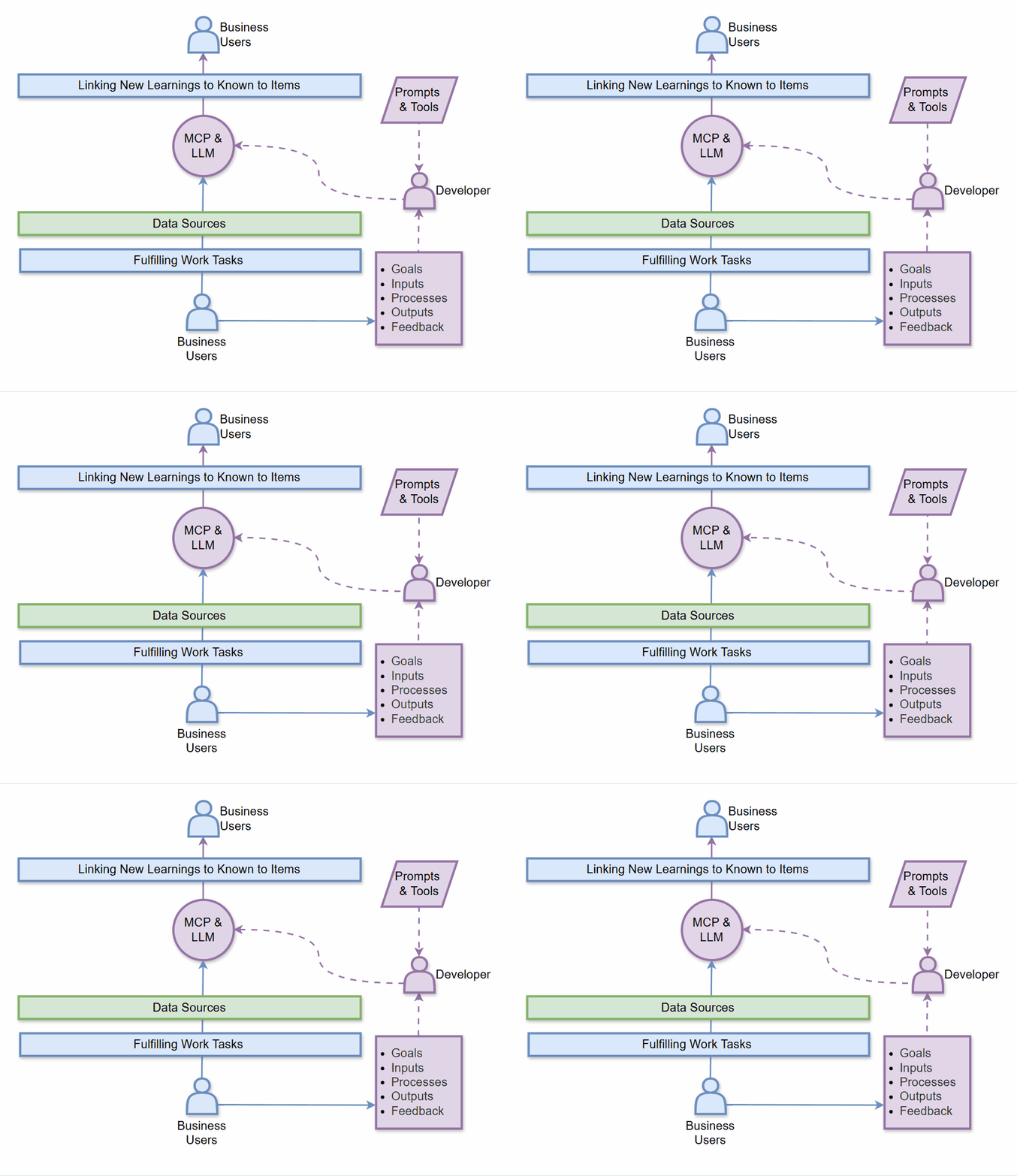
MCP: Meeting Business Users Where They Are
MCP with Query Capabilities Model Context Protocol (MCP) represents a paradigm shift in how data professionals deliver analytics to business users. At its core, MCP transforms the traditional analytics workflow by enabling Data Engineers and Data Analysts to encode their domain observations into structured prompts, resources, and tools that power intuitive, conversational interactions. The Observation-to-Context…
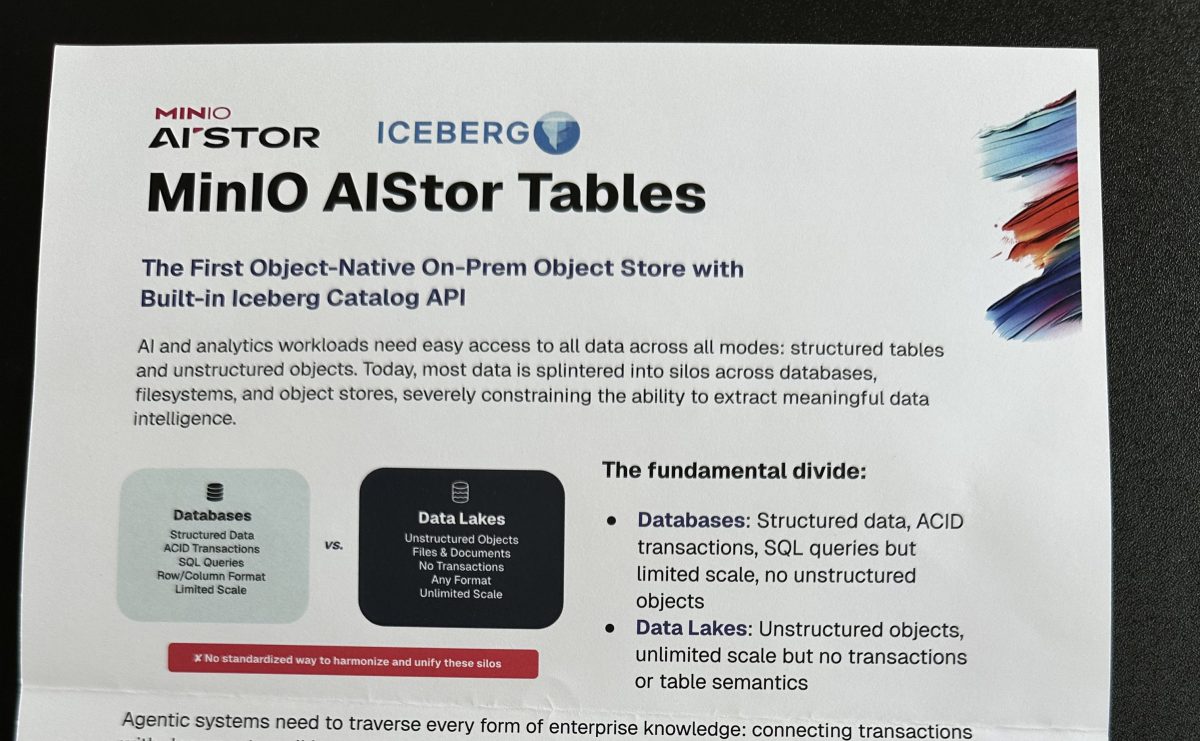
MinIO AIStor: Key Takeaways from Their Conference Booth 2025
MinIO’s booth focused on AIStor, their S3-compatible platform designed for AI-scale data challenges. The conversation centered on escaping cloud vendor lock-in while maintaining full compatibility with existing S3-based workflows. AIStor Tables: The Big News The headline feature is AIStor Tables (currently in tech preview), which addresses a common AI infrastructure challenge: managing structured and unstructured data in…

Grafana Observability Stack Overview
In today’s data-driven landscape, organizations rely on complex systems and integrations to process, transform, and deliver critical information. When something goes wrong, and it will. Having a robust observability is the difference between hours of frustrated debugging and quickly identifying and resolving issues. Observability rests on three foundational pillars that work together to provide complete…

Grafana Mimir: A Technical Architecture Overview
Grafana Mimir is an open source, horizontally scalable time series database designed for long-term storage of Prometheus metrics. Built on a microservices architecture, Mimir provides high availability and multi-tenancy while maintaining compatibility with Prometheus’ remote write API. Core Architecture Mimir follows a microservices-based design where all components are compiled into a single binary. The (-target)…
 Ross McNeely