

- Data, BI, ML, AI is Connected: The Critical Framework You Are Missing
- Building AI Systems with Databricks Multi-Agent Supervisor
- Snowflake Cortex Agents: Structured and Unstructured Data
- Fabric Data Agent: Structured and Unstructured Data
- Maximizing Power BI Copilot: A Data Analyst Guide to AI-Ready Semantic Models
- MCP: Meeting Business Users Where They Are
- AI-Powered Data Engineering with Model Context Protocol
- How Model Context Protocol Transforms Database Access for Everyone: Microsoft Perspective
- Scoping Data and AI Projects
- Setting Your Data and AI Projects Up for Success: A Strategic Guide to Timelines and Metrics
- The Hidden Key to Data and AI Project Success: Aligning Teams and Stakeholders
- Defining Data and AI Capabilities and Technology Requirements: Building a Foundation for Project Success
- From Vision to Reality: Why Effective Scoping is the Make-or-Break Factor for Data and AI Projects
- Data Quality Metrics Schema
- AI Quality Metrics Schema
- The Foundation of AI Success Part III: Why AI Quality Metrics Are Critical for AI Solutions
- The Foundations of AI Success Part II: Why Document and Content Management are Critical for AI Solutions
- The Foundations of AI Success Part I: Why Data Quality Metrics Are Critical for AI Solutions
- Effective Team Structures for LLM Application Success
- Deployment Strategies: Optimizing Azure AI Foundry Models for Cost, Performance, and Scale
- New AI Instruction Strategy in Microsoft Fabric: A Technical Overview
- Data Modeling Guide for AI
- Agent Bricks: Advancing Task-Specific Agent Development
- Strategy to Strengthen Copilot Studio Topics
- AI and SQL from “Ground to Cloud”
- Tracking AI Usage in Healthcare UPDATE
- Databricks Mosaic AI Framework
- Microsoft Fabric AI Functions
- Copilot Studio
- Choose Models from Azure AI Foundry: A Component Guide
- Azure AI Foundry and VS Code Integration Overview
- Leveraging Hubs and Projects in Azure AI Foundry
- Azure AI Foundry
- Aggregating Data Context to the Right
- Shifting Data Capabilities to the Left
- Microsoft Fabric Data Agents and Azure AI Foundry Agents
- Tracking AI Usage in Healthcare (part 3 of 3)
- Tracking AI Usage in Healthcare (part 2 of 3)
- Tracking AI Usage in Healthcare (part 1 of 3)
- Microsoft Fabric Data Agent Concept
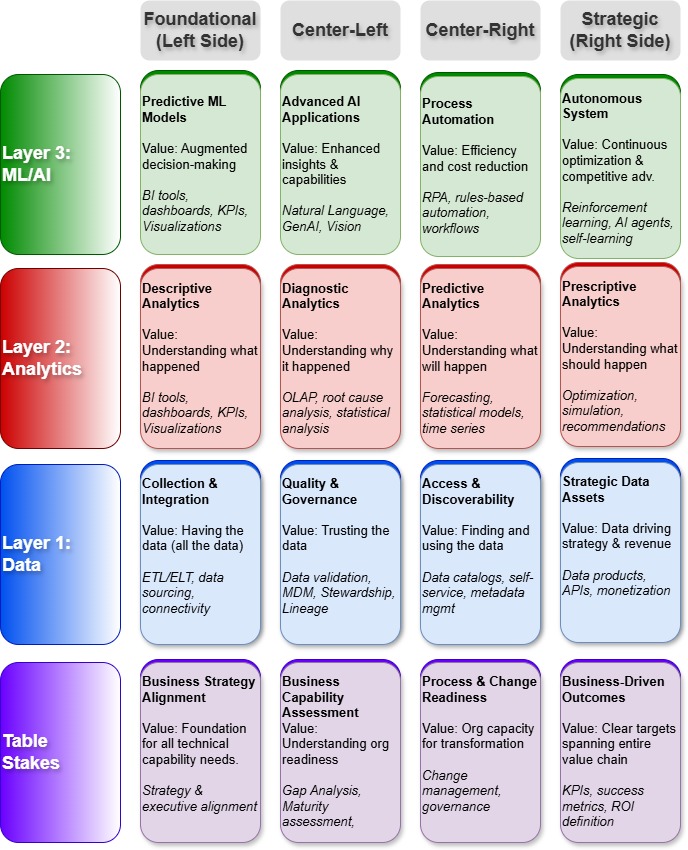
Data, BI, ML, AI is Connected: The Critical Framework You Are Missing
Understanding the Vertical and Horizontal Modeling of Data, Analytics, and AI Success Every week, another organization announces a major AI initiative. Billions are being invested in artificial intelligence, machine learning, and generative AI. Yet studies show the rate these initiatives fail to deliver meaningful business value. The culprit is not technology, but instead it is…

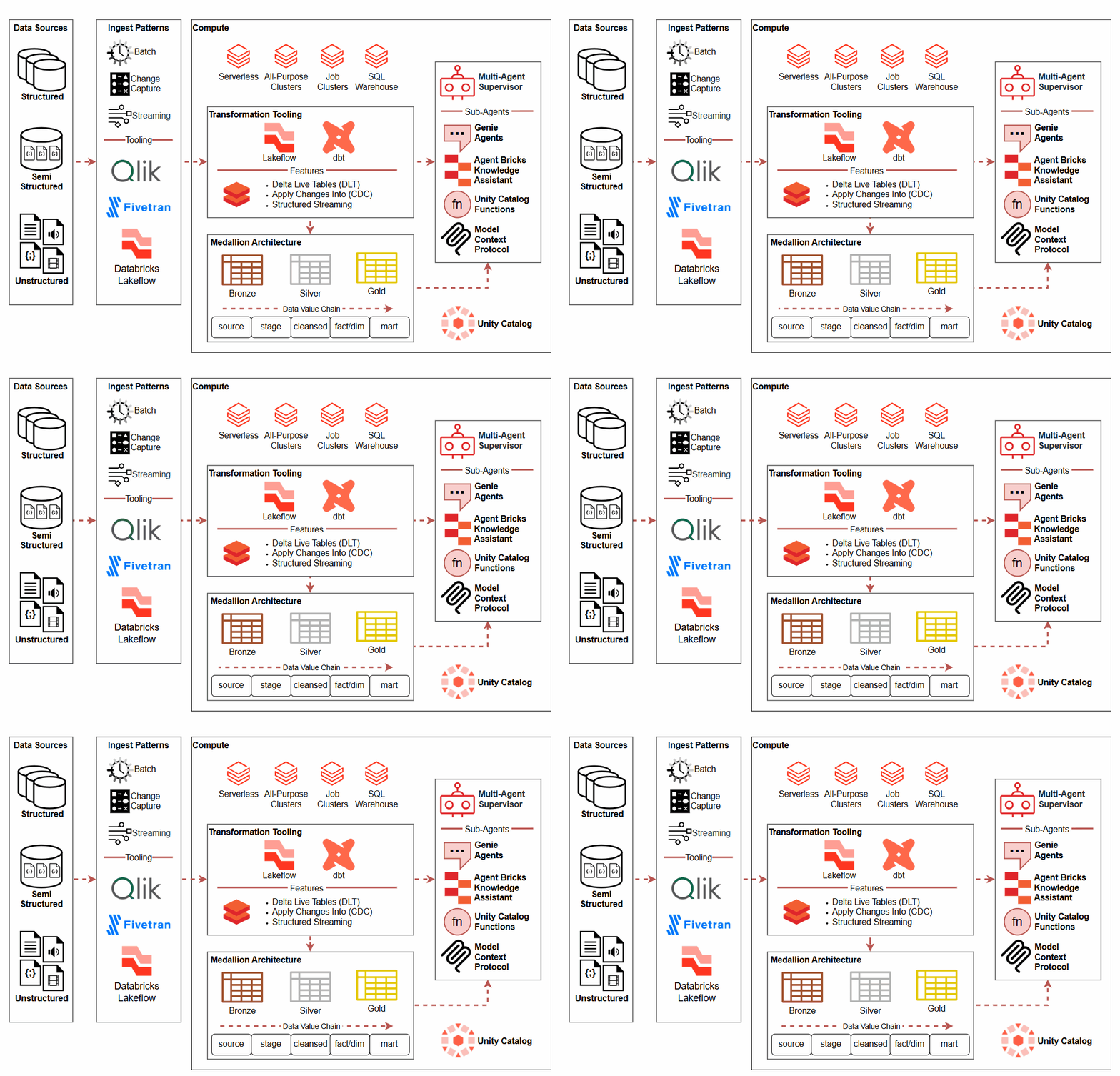
Building AI Systems with Databricks Multi-Agent Supervisor
Enterprise AI has evolved beyond simple chatbots answering single questions. Modern organizations need AI systems that can handle complex queries spanning multiple data sources, domains, and knowledge types. The Databricks Multi-Agent Supervisor addresses this challenge by orchestrating specialized AI agents into a coordinated system that delivers comprehensive, accurate responses while maintaining enterprise grade governance. Coordinated…
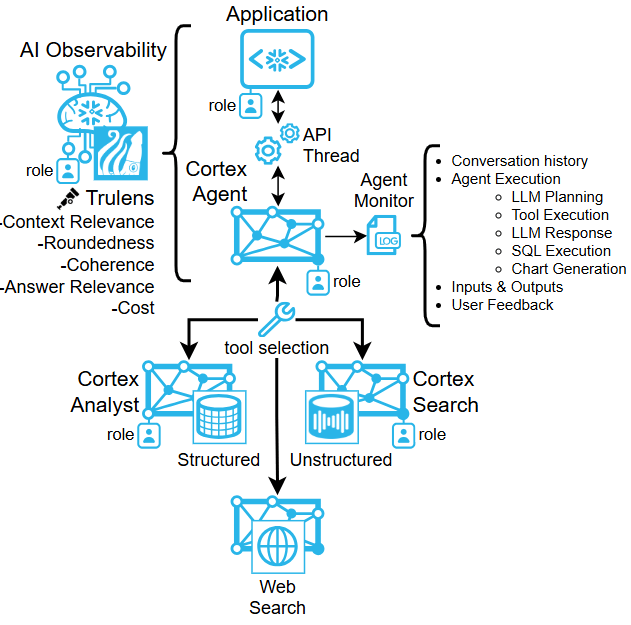
Snowflake Cortex Agents: Structured and Unstructured Data
Enterprise AI faces a fundamental trust problem. While language models generate fluent responses, users increasingly question whether those answers are actually true. The solution is not more sophisticated text generation. Instead, the answer is intelligent orchestration of verified data sources with quality measurement. Snowflake Cortex Agents solve this through a three-tier architecture that automatically routes…
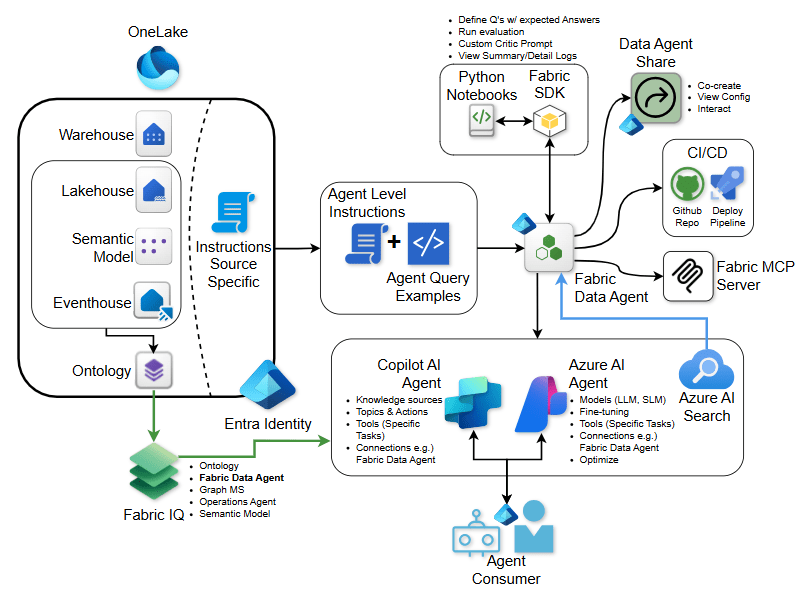
Fabric Data Agent: Structured and Unstructured Data
What is Microsoft Fabric Data Agent? Microsoft Fabric Data Agent is an AI-powered conversational system that enables users to interact with enterprise data using natural language queries, eliminating the need for complex SQL, DAX, or KQL expertise Microsoft Learn. The system uses Azure OpenAI Assistant APIs to process questions, identify relevant data sources, and generate…

Maximizing Power BI Copilot: A Data Analyst Guide to AI-Ready Semantic Models
Overview of Copilot in Power BI Imagine asking your data a question in plain English and getting an instant, accurate answer. That’s the promise of Power BI Copilot as a generative AI assistant that can transform how users interact with business intelligence. Rather than clicking through menus or building complex queries, users can simply type…
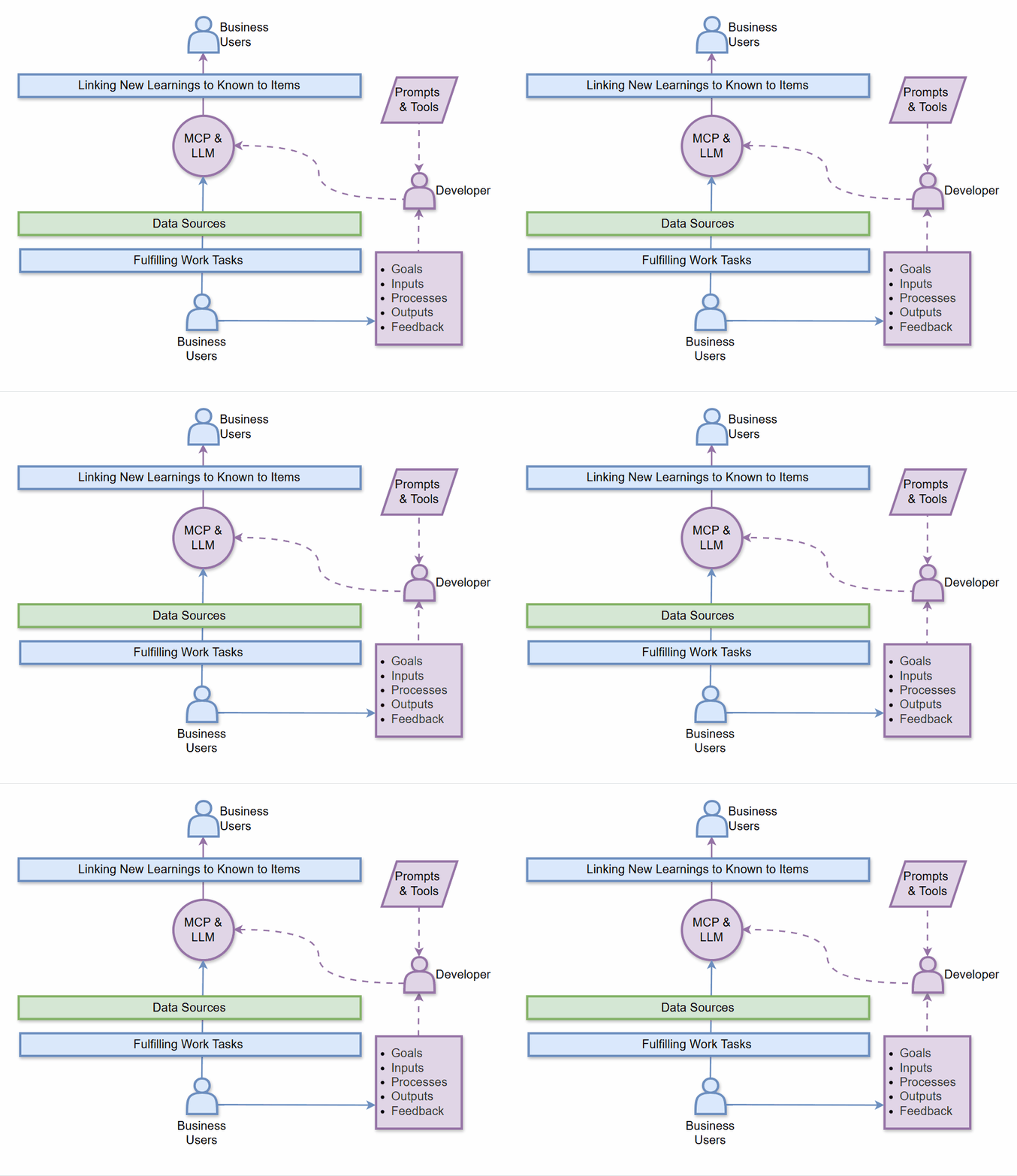
MCP: Meeting Business Users Where They Are
MCP with Query Capabilities Model Context Protocol (MCP) represents a paradigm shift in how data professionals deliver analytics to business users. At its core, MCP transforms the traditional analytics workflow by enabling Data Engineers and Data Analysts to encode their domain observations into structured prompts, resources, and tools that power intuitive, conversational interactions. The Observation-to-Context…

AI-Powered Data Engineering with Model Context Protocol
The data engineering landscape is undergoing a transformative shift. As organizations race to harness the power of AI agents to automate data flows and generate insights. How do you speed up data engineering to deliver data quality to meet the demands of AI projects? The same tool that can enable AI Agents to connect to…

How Model Context Protocol Transforms Database Access for Everyone: Microsoft Perspective
The gap between those who can extract insights from data and those who need insights has long been one of technology’s most persistent challenges. Database administrators and developers speak SQL; business users speak strategy. This disconnect often means valuable data-driven decisions are delayed, opportunities are missed, and innovation is stifled by the simple inability to…

Setting Your Data and AI Projects Up for Success: A Strategic Guide to Timelines and Metrics
After working with organizations on data and AI engagements, one pattern emerges consistently… the projects that succeed aren’t necessarily those with the most sophisticated algorithms or the largest datasets. They’re the ones that establish clear timelines and measurable success criteria from day one. Whether you’re tackling customer retention challenges or optimizing operational workflows, the difference…
 Ross McNeely