
- Microsoft Fabric IQ: The Foundation Data Architects Need to Know
- Fabric Data Agent: Structured and Unstructured Data
- Maximizing Power BI Copilot: A Data Analyst Guide to AI-Ready Semantic Models
- AI-Powered Data Engineering with Model Context Protocol
- How Model Context Protocol Transforms Database Access for Everyone: Microsoft Perspective
- New AI Instruction Strategy in Microsoft Fabric: A Technical Overview
- 4x Fabric Efficiency with the new Native Execution Engine
- Microsoft Fabric AI Functions
- Microsoft Fabric Data Agents and Azure AI Foundry Agents
- Microsoft Fabric Data Agent Concept
- MS Fabric with Snowflake to PowerBI
- Microsoft Fabric: Lakehouse Foundational Capabilities
- Business Analysis Future State Measurables with Microsoft Fabric
- Microsoft Fabric Capability Analysis Example
- Deeper Dive into Microsoft Fabric and Business Needs
- Microsoft Fabric Scoping Overview
- Microsoft Fabric Team Structure
- Business Need and Microsoft Fabric Capabilities
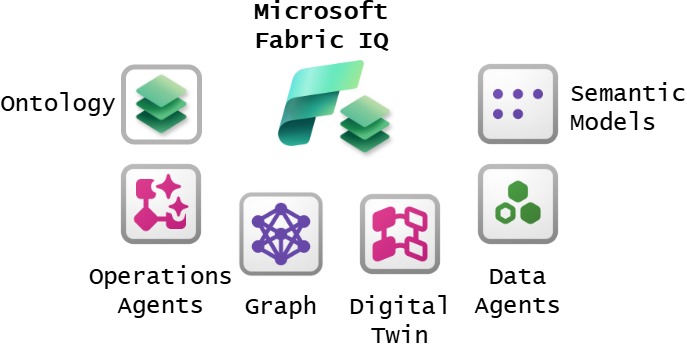
Microsoft Fabric IQ: The Foundation Data Architects Need to Know
Building Enterprise AI on a Foundation of Shared Business Meaning For Data Architects, the pressure has never been greater. Business stakeholders want conversational AI that understands their domain. Compliance teams need governed, auditable data access. Engineers need semantic consistency across lakehouses, warehouses, and real-time streams. Microsoft Fabric IQ is Microsoft’s platform to support those capabilities,…

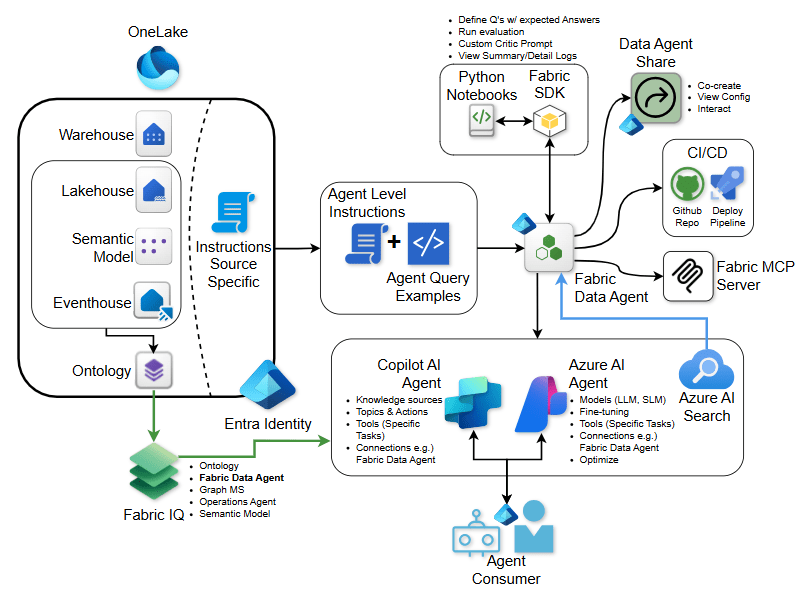
Fabric Data Agent: Structured and Unstructured Data
What is Microsoft Fabric Data Agent? Microsoft Fabric Data Agent is an AI-powered conversational system that enables users to interact with enterprise data using natural language queries, eliminating the need for complex SQL, DAX, or KQL expertise Microsoft Learn. The system uses Azure OpenAI Assistant APIs to process questions, identify relevant data sources, and generate…

Maximizing Power BI Copilot: A Data Analyst Guide to AI-Ready Semantic Models
Overview of Copilot in Power BI Imagine asking your data a question in plain English and getting an instant, accurate answer. That’s the promise of Power BI Copilot as a generative AI assistant that can transform how users interact with business intelligence. Rather than clicking through menus or building complex queries, users can simply type…

AI-Powered Data Engineering with Model Context Protocol
The data engineering landscape is undergoing a transformative shift. As organizations race to harness the power of AI agents to automate data flows and generate insights. How do you speed up data engineering to deliver data quality to meet the demands of AI projects? The same tool that can enable AI Agents to connect to…

How Model Context Protocol Transforms Database Access for Everyone: Microsoft Perspective
The gap between those who can extract insights from data and those who need insights has long been one of technology’s most persistent challenges. Database administrators and developers speak SQL; business users speak strategy. This disconnect often means valuable data-driven decisions are delayed, opportunities are missed, and innovation is stifled by the simple inability to…
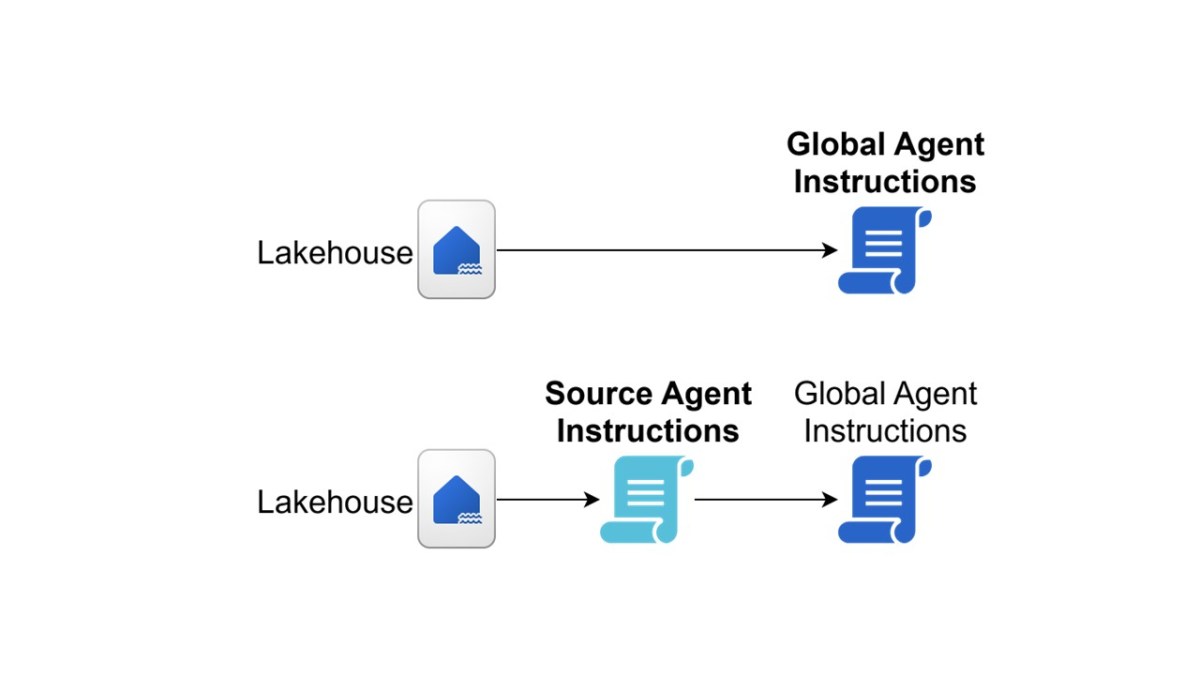
New AI Instruction Strategy in Microsoft Fabric: A Technical Overview
Modern organizations manage increasingly complex data ecosystems with diverse sources, schemas, and usage patterns. Microsoft Fabric Data Agents address this complexity by serving as intermediaries between users and data sources, but effective implementation requires careful consideration of instruction strategies. Updated article on including Source and Global Instructions: Fabric Data Agent: Structured and Unstructured Data –…

4x Fabric Efficiency with the new Native Execution Engine
The new Native Execution Engine (NEE) leverages columnar format and vectorized processing to boost query execution time. The performance is driven by translating Spark code into Optimized C++ code with Apache Gluten and Velox. Utilizing the NEE can increase the speed while reducing cost enabling you to process more. Balancing Execution vs Optimization Efficient execution…

Microsoft Fabric AI Functions
In the rapidly-evolving world of data engineering and artificial intelligence (AI), Microsoft Fabric AI Functions emerge as a transformative tool, enabling seamless integration of Generative AI (GenAI) into data workflows. Whether you are summarizing text, classifying data, generating creative content, or solving complex analytical problems, AI Functions provide powerful capabilities—all accessible with a single line…

Microsoft Fabric Data Agents and Azure AI Foundry Agents
Greater than their parts… It may seem like a baby step, but integrating Microsoft Fabric Data Agents with Azure AI Foundry Agents offers a seamless and efficient pathway for managing and analyzing vast amounts of data. This enhances data accessibility and insights, enabling organizations to make informed decisions faster. Moreover, leveraging the advanced capabilities of…

Microsoft Fabric Data Agent Concept
Fabric Data Agents allow you to build conversational Q&A systems using generative AI allowing you to convert natural language into data queries and returning the answers back in natural language. Benefit of Agents in Fabric… Microsoft Fabric OneLake offers significant advantages for data management by enabling the construction of Fabric Data Agents, leveraging a diverse…
 Ross McNeely