
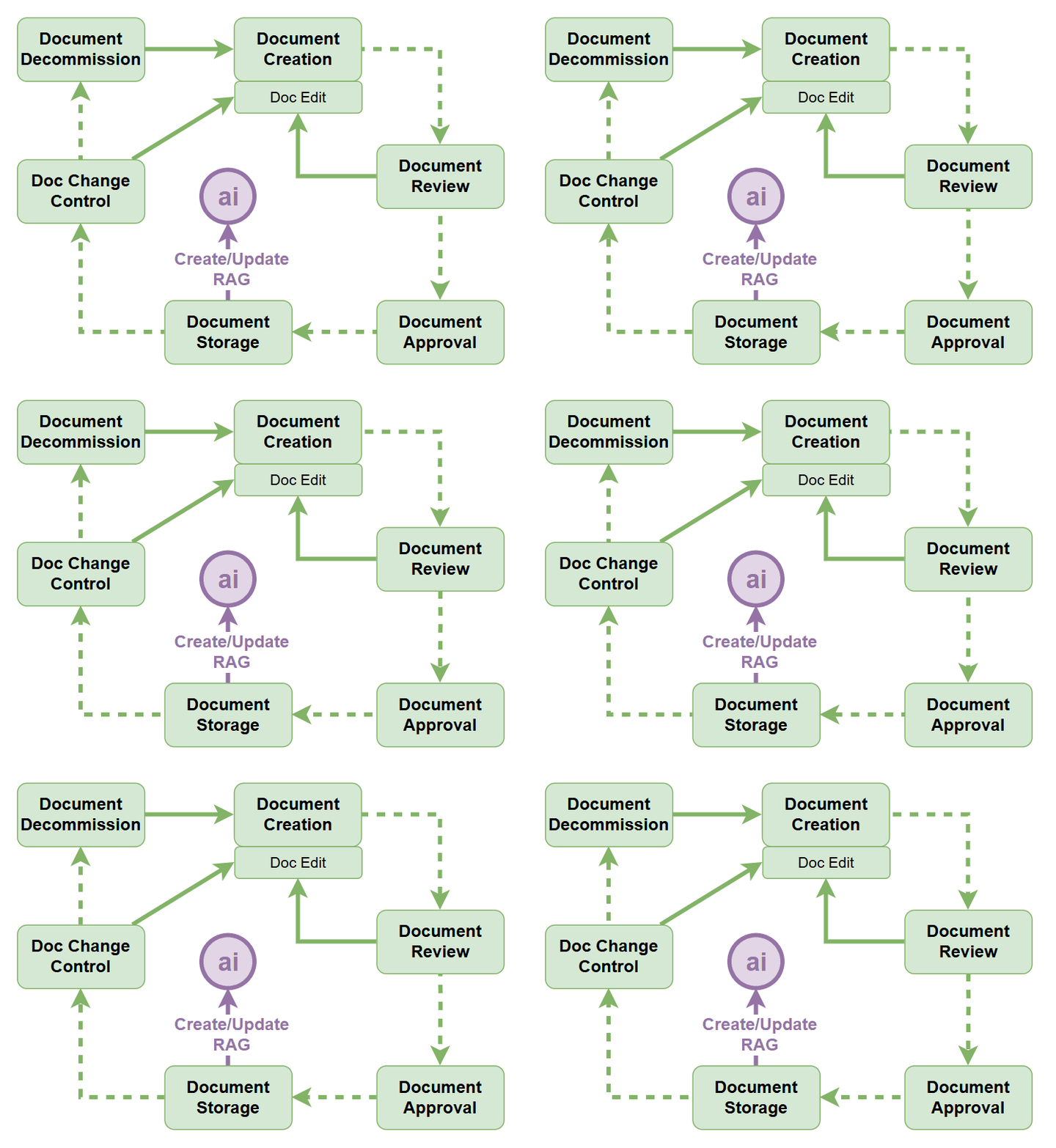
Artificial intelligence is transforming how organizations operate, but success depends on more than just sophisticated algorithms and computing power. The foundation of any effective AI solution lies in something far more fundamental: the quality, organization, and accessibility of the content that feeds these systems. As AI adoption accelerates across industries, document and content management have emerged as critical success factors that can make or break AI initiatives.
The Data Foundation Challenge
AI systems are only as good as the data they consume. While much attention focuses on structured data in databases and data warehouses, the reality is that 80-90% of enterprise information exists in unstructured formats—documents, emails, presentations, videos, and other content scattered across systems. This content contains invaluable knowledge, but without proper management, it becomes a liability rather than an asset.
Consider a healthcare AI system designed to assist with diagnosis. If medical records are inconsistent in format, contain duplicate information, or lack proper metadata, the AI may miss critical patterns or make incorrect recommendations. Similarly, a customer service chatbot trained on poorly organized documentation will provide frustrating, inaccurate responses that damage customer relationships rather than enhance them. The result is not just poor customer experience, but a systematic breakdown of trust in AI powered solutions.
Quality Control: The Make-or-Break Factor
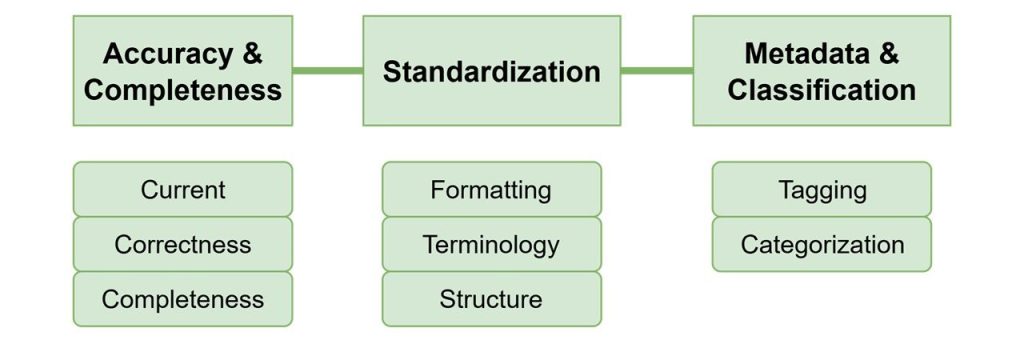
Effective content management ensures AI systems receive clean, consistent, and relevant information. This involves establishing rigorous quality control processes that address several key areas:

- Accuracy and Completeness: Documents must be current, factually correct, and comprehensive. Outdated or incomplete content can lead AI systems to make decisions based on obsolete information or insufficient context.
- Standardization: Consistent formatting, terminology, and structure across documents enable AI systems to process and understand content more effectively. When documents follow established standards, machine learning algorithms can more easily identify patterns and extract meaningful insights.
- Metadata and Classification: Proper tagging and categorization help AI systems understand context and relationships between different pieces of content. Rich metadata enables more sophisticated analysis and improves the relevance of AI-generated outputs.
Governance and Compliance for AI-Ready Content
Creating a content management infrastructure that supports high-quality AI solutions requires strategic planning and systematic implementation. Organizations must establish clear governance frameworks that define roles, responsibilities, and processes for content creation, review, and maintenance. Without proper governance, even the best-intentioned content management efforts will deteriorate over time.
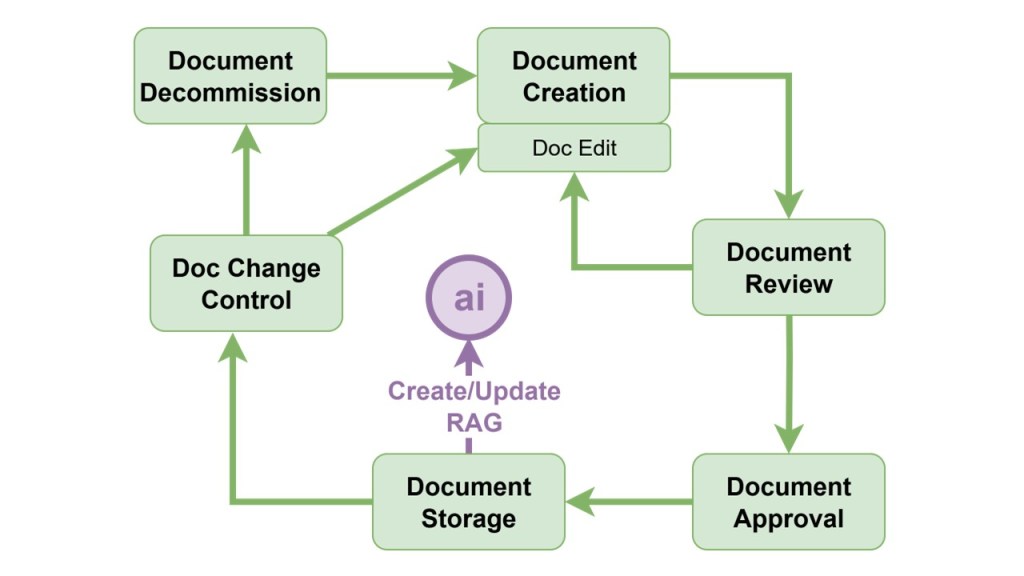
Technology infrastructure plays a crucial supporting role. Modern content management systems should include automated quality checking tools, version control mechanisms, and integration capabilities that allow AI systems to access and process content efficiently. However, technology alone cannot solve content quality problems. There must be a human oversight and continuous improvement processes.
As AI systems become more prevalent in regulated industries, content management plays a crucial role in ensuring compliance and accountability. Financial services firms using AI for loan approvals must maintain detailed audit trails of the documents and data that influenced decisions. Healthcare organizations need to ensure patient privacy while enabling AI systems to access necessary medical information.
Robust document management systems provide the governance framework necessary to track content lineage, manage access permissions, and maintain regulatory compliance. They enable organizations to demonstrate that AI decisions are based on approved, authoritative sources rather than potentially biased or inappropriate content.
Enabling Advanced AI Capabilities
Modern AI applications like retrieval-augmented generation (RAG) and knowledge graphs depend heavily on well-managed content repositories. These systems retrieve relevant information from document collections to provide context for AI responses, making the organization and searchability of content paramount.
When content is properly managed, AI systems can:
- Provide more accurate and contextually appropriate responses
- Cite specific sources and maintain transparency in their reasoning
- Adapt to new information more quickly and effectively
- Reduce hallucinations by grounding responses in verified content
The ROI of Content Management in AI
Organizations that invest in proper document and content management see measurable returns on their AI investments. Well-managed content leads to faster AI model training, more accurate predictions, and reduced maintenance overhead. Conversely, poor content management can derail AI projects, leading to costly rework and delayed implementations.
The time saved in data preparation alone can be substantial. Data scientists often spend 60-80% of their time cleaning and preparing data. When content is already well-organized and properly managed, this time can be redirected toward model development and optimization.
Building the Foundation for AI Success
Successful AI implementation requires treating document and content management as a strategic priority, not an afterthought. Organizations should:
- Establish Content Standards: Develop clear guidelines for document creation, formatting, and metadata requirements that support AI consumption.
- Implement Automated Quality Checks: Use tools to identify and flag content issues like duplicates, outdated information, or formatting inconsistencies.
- Create Feedback Loops: Monitor how AI systems perform with different types of content and use these insights to continuously improve content management processes.
- Plan for Scale: Design content management systems that can handle growing volumes of information while maintaining quality and accessibility.
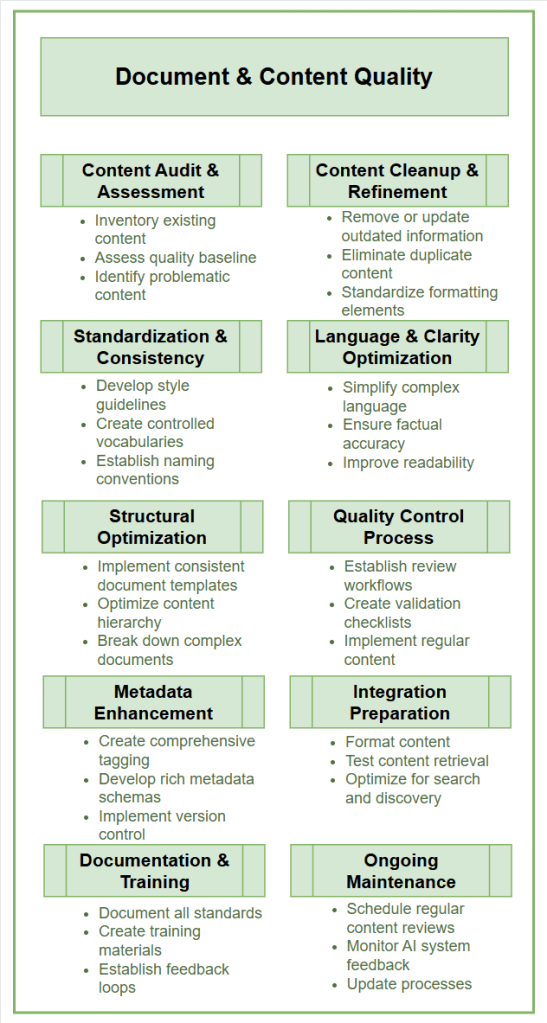
AI-Ready Document and Content Management
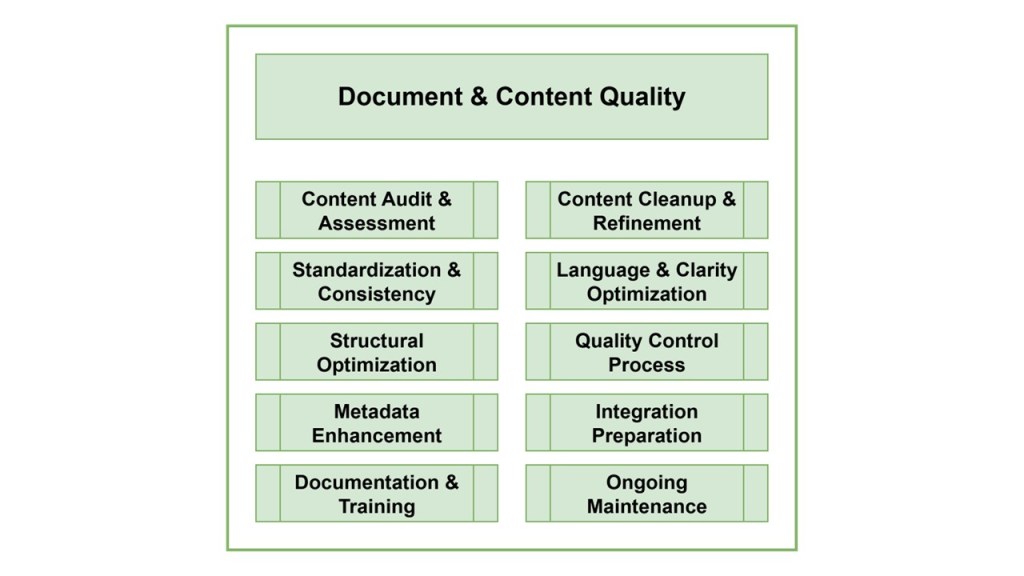
By systematically implementing these steps, organizations can transform their content into a high-quality foundation that enables AI systems to perform accurately and effectively.
- Content Audit and Assessment
- Inventory existing content by cataloging all documents, identifying content types, formats, and current organization systems.
- Assess quality baseline by reviewing samples for accuracy, consistency, and completeness issues.
- Identify problematic content such as outdated materials, duplicates, and poorly structured documents that could confuse AI systems.
- Standardization and Consistency
- Develop style guidelines specific to AI consumption, including consistent terminology, formatting rules, and structural templates.
- Create controlled vocabularies and approved term lists to ensure uniform language across all content.
- Establish naming conventions for documents, files, and content categories that AI systems can easily parse and understand.
- Structural Optimization
- Implement consistent document templates with standardized headings, sections, and hierarchical structures.
- Optimize content hierarchy using proper heading tags (H1, H2, H3) and logical information flow.
- Break down complex documents into smaller, focused sections that AI can process more effectively.
- Metadata Enhancement
- Create comprehensive tagging systems with relevant keywords, topics, and content categories.
- Develop rich metadata schemas including author information, creation dates, content type, target audience, and subject matter.
- Implement version control metadata to help AI systems identify the most current information.
- Content Cleanup and Refinement
- Remove or update outdated information that could mislead AI systems with obsolete data.
- Eliminate duplicate content and consolidate similar materials to prevent AI confusion.
- Standardize formatting elements like dates, numbers, addresses, and contact information across all documents.
- Language and Clarity Optimization
- Simplify complex language and jargon that might be difficult for AI to interpret consistently.
- Ensure factual accuracy through fact-checking and source verification.
- Improve readability by using clear, concise language and active voice where appropriate.
- Quality Control Processes
- Establish review workflows with multiple checkpoints before content publication.
- Create validation checklists covering all AI-readiness criteria for consistent evaluation.
- Implement regular content audits to maintain quality standards over time.
- Integration Preparation
- Format content for API consumption ensuring compatibility with content management systems and AI platforms.
- Test content retrieval by validating that AI systems can successfully access and process the content.
- Optimize for search and discovery using SEO principles that also benefit AI content understanding.
- Documentation and Training
- Document all standards and processes so future editors can maintain consistency.
- Create training materials for content creators on AI-ready writing practices.
- Establish feedback loops to continuously improve content quality based on AI system performance.
- Ongoing Maintenance
- Schedule regular content reviews to keep information current and accurate.
- Monitor AI system feedback to identify content that causes processing issues.
- Update processes as AI technologies and organizational needs evolve.
The Competitive Advantage
As AI becomes commoditized, the differentiating factor between organizations won’t be access to AI technology—it will be the quality and organization of the content that powers these systems. Companies with superior content management capabilities will build more effective AI solutions, make better decisions, and deliver superior customer experiences.
The organizations that recognize document and content management as critical infrastructure for AI will position themselves for long-term success. Those that treat it as a secondary concern may find their AI initiatives falling short of expectations, despite significant investments in technology and talent.
In the age of AI, content truly is king—but only when it’s properly managed, organized, and governed. The time to build these capabilities is now, before AI initiatives outpace the content foundation needed to support them.


 Ross McNeely
Leave a reply to The Data Detective: How Quality Assessment Shapes Successful Data and AI Project Scoping – Ross McNeely Cancel reply