
AI-powered analytics is transforming how organizations interact with their data. Natural language interfaces are making it possible for business users to ask complex analytical questions without writing SQL or building dashboards. However, the success of these AI agents heavily depends on the underlying data model design.
Creating effective data models for AI agents isn’t just about following traditional database design principles—it requires a new approach that balances technical structure with semantic clarity. Here is a comprehensive guide to building data models that enable AI agents to deliver insightful answers to natural language questions.
The Foundation: Schema Design Principles

Descriptive Names Are Everything
When designing for AI agents, your column and table names become the primary interface between human questions and data reality. Instead of cryptic abbreviations like ord_dt, use clear, descriptive names like order_date. AI agents rely heavily on these names to understand context and map natural language queries to the appropriate data fields.
Think of your schema as a conversation partner for the AI. Names like customer_acquisition_cost, monthly_recurring_revenue, and product_category_name immediately convey meaning, while abbreviated versions require additional context that may not be available to the agent.
Consistency Creates Clarity
Establish and maintain consistent naming conventions across your entire data model. Whether you choose snake_case or camelCase, stick with it throughout. Create systematic prefixes for different entity types—perhaps dim_ for dimension tables and fact_ for fact tables. Maintain uniform formats for dates, currencies, and other standardized data types.
This consistency helps AI agents build reliable patterns for interpreting your schema, reducing the likelihood of misunderstanding and improving query accuracy.
Design for Dual Purpose
Your data model needs to support both detailed operational queries and high-level analytical questions. Include transactional details for granular analysis while also providing pre-aggregated summary tables for common business metrics. This dual approach gives AI agents the flexibility to answer both “show me yesterday’s orders” and “what’s our quarterly growth trend” with equal efficiency.
Building the Semantic Layer
Metadata as Documentation
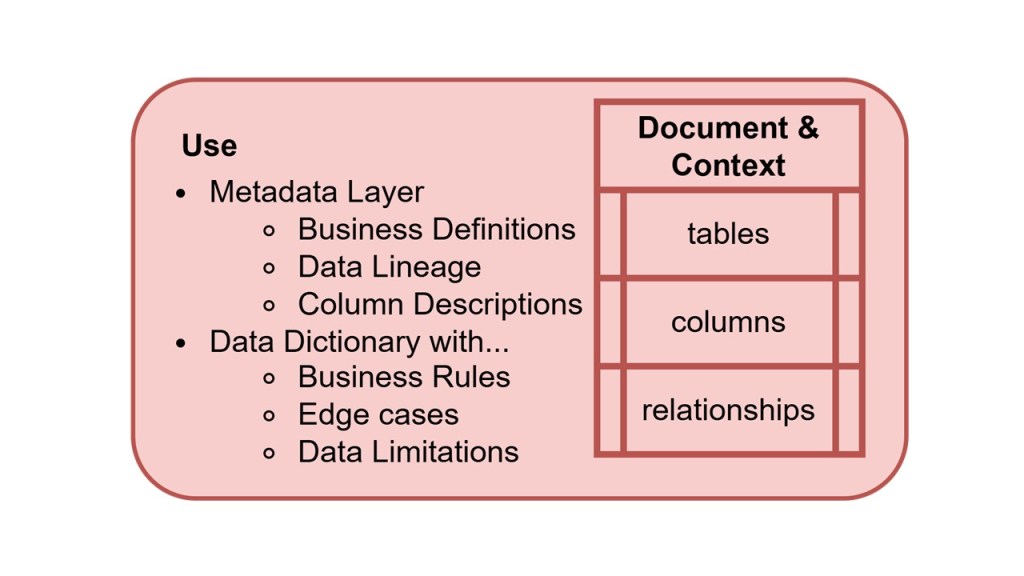
Modern AI agents can leverage rich metadata to better understand your data. Tools like dbt allow you to embed business definitions, data lineage information, and detailed column descriptions directly into your models. Take advantage of this by creating comprehensive documentation that explains not just what each field contains, but why it matters to your business.
Include information about data sources, transformation logic, and business rules. When an AI agent understands that customer_lifetime_value represents “the predicted revenue from a customer relationship over its entire duration, calculated using a 12-month lookback window,” it can provide much more accurate and contextual responses.
Relationship Clarity
Well-defined relationships between entities are crucial for AI agents to understand how to join data correctly. Implement proper foreign keys and create explicit junction tables for many-to-many relationships. Don’t rely on the AI to infer relationships—make them explicit in your schema design.
Consider creating relationship documentation that explains the business logic behind connections. For example, documenting that customers can have multiple orders, but each order belongs to exactly one customer, helps the agent understand how to aggregate data appropriately.
Pre-Built Business Metrics
Rather than expecting AI agents to derive complex business calculations repeatedly, build key metrics directly into your data model. Define calculations for customer lifetime value, conversion rates, year-over-year growth, and other critical business metrics as computed columns or views.
This approach ensures consistency in how metrics are calculated and improves query performance. It also reduces the chance of errors that might occur if the AI attempts to recreate complex business logic from scratch.
Ensuring Data Quality and Consistency
Validation and Standardization

AI agents perform significantly better with clean, standardized data. Implement data validation rules to ensure categorical values are consistent, null values are handled predictably, and data types are appropriate for their intended use.
Create standardized lookup tables for categorical data instead of storing raw string values. This approach not only improves query performance but also helps agents understand the complete set of valid values for different dimensions.
Handling Edge Cases
Document and address edge cases in your data model design. If certain business rules create unusual data patterns, make sure these are clearly explained in your metadata. AI agents need to understand when standard analytical approaches might not apply.
Structural Considerations for Analytics
Strategic Denormalization
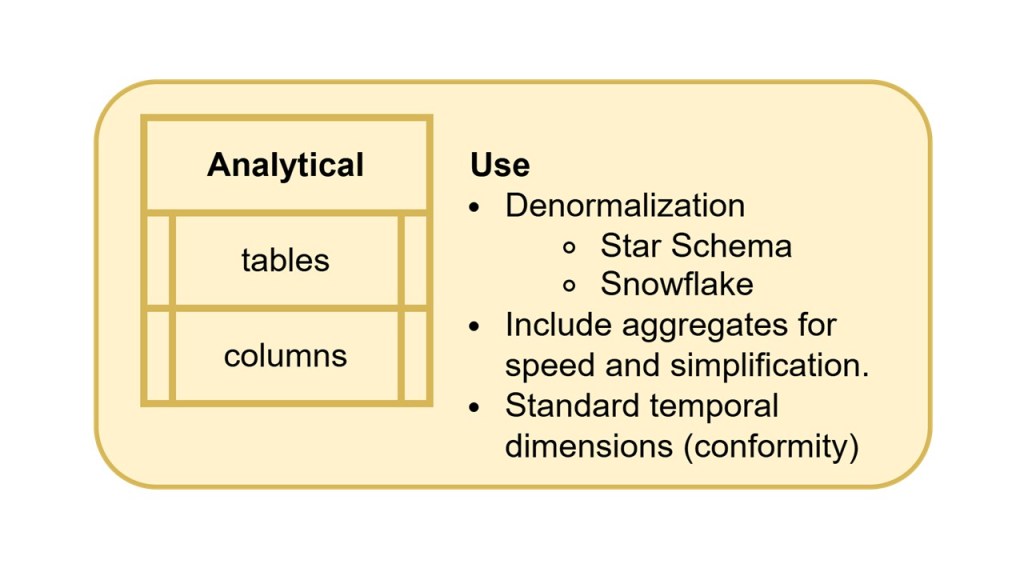
While normalized database structures work well for transactional systems, AI agents often benefit from strategically denormalized analytical schemas. Star and snowflake schema designs reduce the complexity of joins needed for common analytical queries.
Consider creating denormalized fact tables that include commonly queried dimension attributes. This reduces the number of joins an AI agent needs to perform and improves query performance for typical analytical questions.
Temporal Dimensions
Time-based analysis is fundamental to most business questions, so make temporal dimensions explicit in your design. Create comprehensive date dimension tables and ensure all fact tables have clear temporal markers.
Include multiple date formats and pre-calculated time periods (fiscal quarters, weeks, etc.) to support various analytical needs. This enables AI agents to easily handle questions like “compare this quarter to last quarter” or “show me the weekly trend.”
Dimensional Modeling Principles
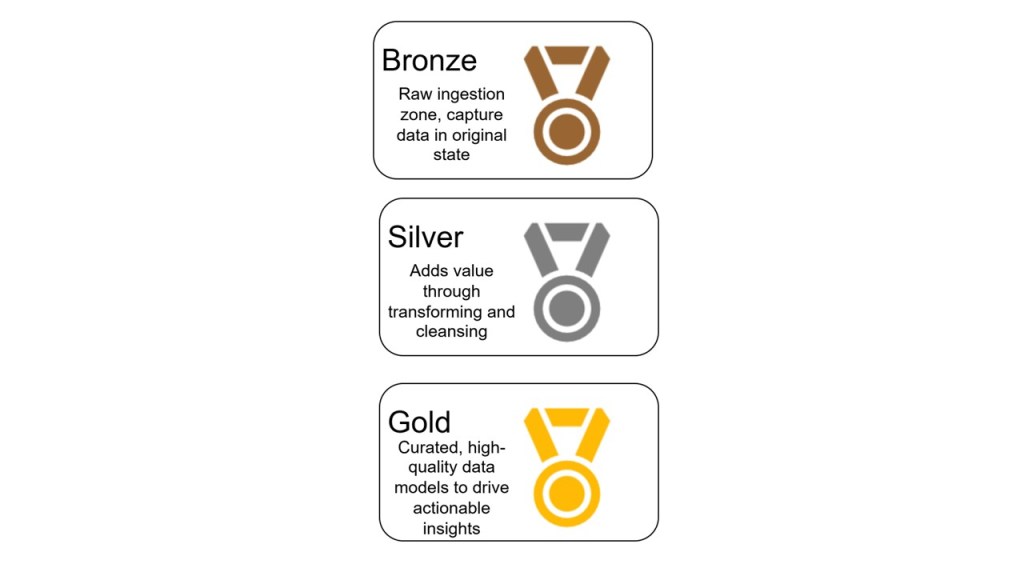
Follow established dimensional modeling principles to create clear fact and dimension table structures. This provides a framework that AI agents can understand: facts contain measures that can be aggregated, while dimensions provide the context for grouping and filtering.
Clearly distinguish between additive measures (like sales amounts), semi-additive measures (like account balances), and non-additive measures (like ratios or percentages). This helps agents choose appropriate aggregation methods.
Documentation and Context
Comprehensive Data Dictionaries
Maintain detailed data dictionaries that go beyond simple column definitions. Include business rules, data limitations, edge cases, and quality considerations. Document update frequencies, data freshness expectations, and any known issues or limitations.
This contextual information helps AI agents provide more accurate responses and appropriate caveats when answering analytical questions.
Example Query Patterns
Provide example queries that demonstrate common analytical patterns specific to your domain. These examples help AI agents understand how data should typically be accessed, joined, and aggregated for your particular business context.
Include both simple queries and complex analytical patterns that represent real business questions your organization frequently asks.
Business Logic Documentation
Document the business logic behind derived metrics and calculated fields. Include formulas, special handling requirements, and the reasoning behind specific calculation methods. This ensures that AI agents can explain not just what the numbers show, but how they were calculated.

The Path Forward
Building data models for AI agents requires thinking beyond traditional database design. The goal is creating a structure that’s both technically sound and semantically rich enough for an AI agent to understand the business context behind the data.
Start with clear, descriptive naming conventions and build comprehensive metadata. Focus on creating explicit relationships and pre-calculated business metrics. Invest in data quality and consistency, and always document the business context behind your design decisions.
The effort invested in thoughtful data model design pays dividends in the accuracy and usefulness of AI-generated insights. As natural language analytics becomes more prevalent, organizations with well-designed, semantically rich data models will have a significant advantage in extracting value from their data assets.
Remember: your data model isn’t just a technical artifact—it’s the foundation that enables AI agents to bridge the gap between human questions and data-driven answers. Design it with that conversation in mind.
 Ross McNeely
Leave a comment