

In the rapidly-evolving world of data engineering and artificial intelligence (AI), Microsoft Fabric AI Functions emerge as a transformative tool, enabling seamless integration of Generative AI (GenAI) into data workflows. Whether you are summarizing text, classifying data, generating creative content, or solving complex analytical problems, AI Functions provide powerful capabilities—all accessible with a single line of code. This simplicity is reshaping the way professionals approach data engineering and data science.
The Role of AI Functions in Data Engineering
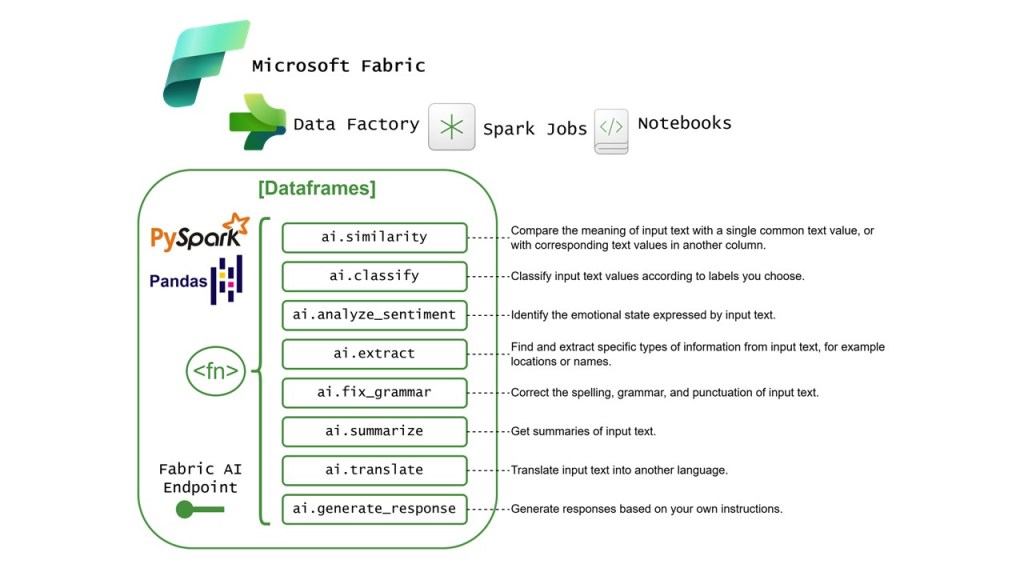
Microsoft Fabric AI Functions are designed to minimize barriers when incorporating advanced AI capabilities into existing workflows. AI Functions offer an intuitive mechanism to enrich Spark or pandas DataFrames, making tasks such as data transformation, manipulation, and analysis faster.
Single-Line Code Integration
One of the standout features of Microsoft Fabric AI Functions is their simplicity. Users can harness GenAI capabilities for tasks such as text summarization, classification, and generation without wrestling with complex syntax or setups. A single line of code can invoke these powerful AI-driven processes, ensuring accessibility for both seasoned data scientists and beginners.
Applications in Data Science and Engineering
From analyzing customer feedback to generating predictive insights, Microsoft Fabric AI Functions offer a broad spectrum of applications:
- Summarization: Condense large datasets, documents, or articles into concise summaries, facilitating rapid decision-making or reporting.
- Classification: Automatically categorize text, enabling streamlined organization and analysis of data.
- Text Generation: Create compelling narratives, generate responses, or simulate human-like communication based on datasets.
- Data Transformation: Enhance Spark or pandas workflows with AI-powered manipulation and enrichment of data.
These functions seamlessly integrate into workflows, enabling users to combine the best of AI innovation with traditional data engineering techniques.
Advantages of Microsoft Fabric AI Functions
Flexibility and Compatibility
Microsoft Fabric AI Functions are compatible with popular data frameworks such as Spark and pandas. This ensures flexibility and ease of integration into diverse workflows—whether you’re working on large-scale distributed data or smaller, local datasets.
Time and Resource Efficiency
By reducing manual processes and eliminating complex configurations, AI Functions save time and resources. Professionals can focus on deriving insights and creating impact rather than being bogged down by the technicalities of implementation.
Seamless Workflow Integration
Microsoft Fabric AI Functions are designed to complement existing data workflows. This seamless integration ensures that engineers and scientists can enhance their data processes without disrupting established systems. For example, incorporating GenAI into Spark-based big data analyses or pandas-driven exploratory tasks becomes effortless, fostering efficiency and productivity.
GenAI Unlocks Limitless Potential
With Microsoft Fabric AI Functions, GenAI’s capabilities are maximized to their full potential. Beyond summarization, classification, and text generation, users can explore advanced possibilities:
- Sentiment analysis for customer feedback evaluation.
- Predictive modeling for data-driven forecasting.
- Creative storytelling and content generation for marketing efforts.
- Automated translation and language processing for global communication.
The range of applications is vast, empowering professionals to push boundaries and innovate within their industries.

Transform and enrich data seamlessly with AI functions – Microsoft Fabric | Microsoft Learn
 Ross McNeely
Leave a comment